
Roof Care
7 Ways to Maintain Faucets in Hard Water, Boca Raton
Keep Boca Raton faucets flowing in South Florida's hard water with 7 simple habits for aerators, seals and handles. See when a plumber should step in.
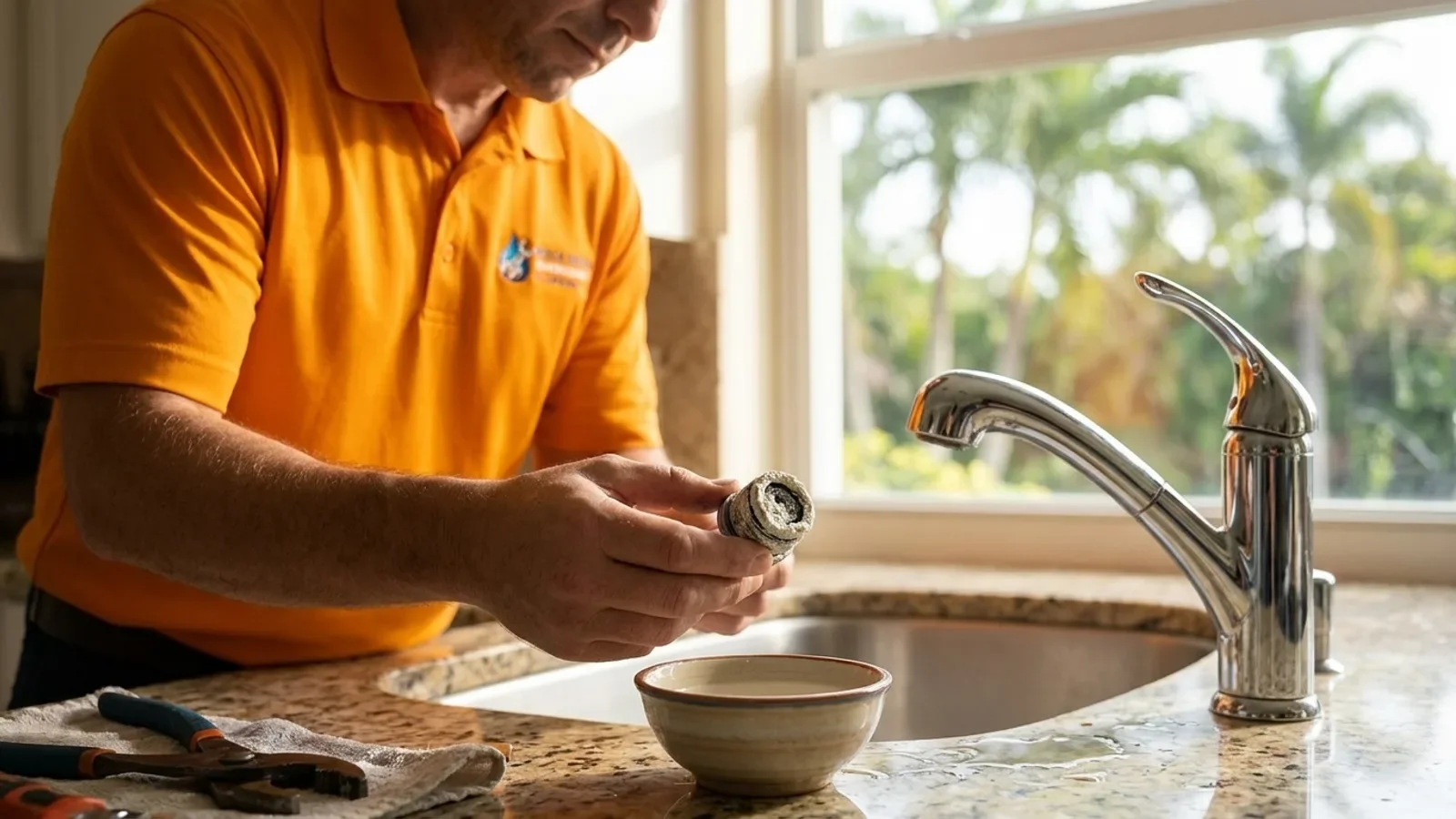
Mineral scale never announces itself. It narrows an aerator, stiffens a cartridge and wears a seal until a drip starts. In Boca Raton and across Palm Beach County, that slow creep is normal. Here are seven habits that help you maintain faucets against hard water in South Florida, especially after a fresh repair or install.
1. Clean the aerator before it chokes the flow
The aerator is the small screen at the tip of the spout, and it catches scale first. When it clogs, the stream sputters, sprays sideways or drops to a trickle. On most faucets you can unscrew it by hand or with a cloth-wrapped pair of pliers. Rinse out the grit, then soak the screen in white vinegar for an hour or so to loosen the white crust. Brush it with an old toothbrush, rinse, and thread it back on snugly. Don't overtighten it. A few minutes every month or two keeps flow steady. If cleaning doesn't restore pressure, the problem may sit deeper in the line, which we cover in our guide to why some Boca homes lose faucet pressure.
2. Wipe the spout and handle dry after use
This one sounds too simple. It works anyway. Every drop left on chrome or brushed nickel evaporates and leaves its minerals behind. Over weeks those spots bond into a chalky film that creeps into the seam around the handle and the base of the spout. That seam is where moisture gets into the faucet body. A quick pass with a microfiber cloth after the evening dishes or your morning routine stops most of it. Keep a cloth hanging near the kitchen sink and in each bathroom so the habit sticks. You'll also notice the finish looks newer for longer, which matters if you just paid for a new fixture.
3. Use gentle cleaners, not harsh scrubbing
When scale does build up, the urge is to attack it. Resist that. Abrasive pads and strong chemical cleaners can strip finishes and dry out rubber parts around the base. Instead, soak a cloth in a mix of vinegar and water, wrap it around the crusted area, and let it sit for 20 to 30 minutes. Wipe, rinse with clean water, and dry. For stubborn spots, repeat rather than scrub harder. Avoid letting acidic solutions sit on stone countertops or specialty finishes, so check your fixture's care instructions first. Gentle and repeated beats aggressive every time.
4. Why Boca Raton water is especially hard on taps
Much of South Florida's drinking water starts underground, drawn from aquifers that sit in limestone. That rock naturally adds calcium and magnesium as water moves through it, which is why white scale shows up on fixtures, showerheads and kettles all over town. Add our year-round heat and humidity, and puddles on fixtures evaporate fast, concentrating deposits. Boca's housing mix plays a role too. Older homes from the 1970s and 1980s often still have original valves or galvanized and copper supply lines that shed debris, while newer construction tends to use single-handle cartridge faucets with tight internal tolerances that scale can jam. Many condo and HOA buildings share supply systems, so pressure swings can stress worn seals. If you're unsure whether your symptoms point to minerals, our post on common hard water signs on Boca Raton faucets walks through what to look for.
5. Don't crank handles closed
A faucet that drips tempts people to tighten the handle harder. That usually makes things worse. Extra force crushes washers and grinds scale against the cartridge's sealing surfaces, which shortens their life. Close handles firmly but gently. If you have to push past a normal stopping point to stop a drip, the internal seal is already wearing. That's a sign the seat, washer or cartridge needs attention, not more muscle. Catching it at this stage often means a smaller repair. Our walkthrough of faucet repair in Boca Raton and what causes failures explains how cartridges, valves and seals break down in local conditions.
6. Give new seals and cartridges a gentle break-in
Right after a repair or a new install, the parts inside are clean and properly seated. Keep them that way. Run the faucet through its full range of hot and cold a few times in the first days so the cartridge moves freely. Watch the base and under the sink for any seep. Check that supply line connections stay dry. If the handle feels gritty, or a drip appears within a short time, call us back rather than living with it. Early on, small issues are easier to correct. Also keep cleaning the aerator, since repair work can knock loose debris from the pipes that lands right in that screen.
7. Know when maintenance isn't enough
Cleaning handles surface scale. It can't fix a cracked cartridge, a corroded valve body or a leak inside the wall. Call a licensed plumber if you see a drip that keeps coming back, green or white corrosion at the connections, water pooling in the vanity cabinet, a handle that's stiff or loose, or fluctuating hot and cold. Those point to worn internal parts or failing supply lines. Don't take apart valves connected to your water supply without the right shutoffs and experience. If the faucet is older and repairs keep stacking up, compare options in our guide to repairing or replacing a faucet in Boca. When you're ready, you can schedule a faucet repair visit with our team.
Frequently Asked Questions
How often should I clean my faucet aerator in Boca Raton?
Every one to two months works for most homes in our area. If flow drops noticeably sooner, clean it more often, since heavy scale can build quickly with local water.
Can hard water cause a faucet to leak?
Yes, over time. Mineral deposits can wear washers, seals and cartridge surfaces so they no longer close tightly, which often leads to drips around the spout or base.
Is vinegar safe for every faucet finish?
Not always. Diluted vinegar is fine on many chrome fixtures, but some specialty finishes and nearby stone surfaces can be sensitive, so check the manufacturer's care guidance first.
Live dispatch · 24 / 7 / 365
Reading this because of an actual problem?
The phone is answered at any hour by a person who can walk you through the shut-off and get a plumber moving your way.
No obligation. Work performed under Florida plumbing contractor license CFC1433655.