
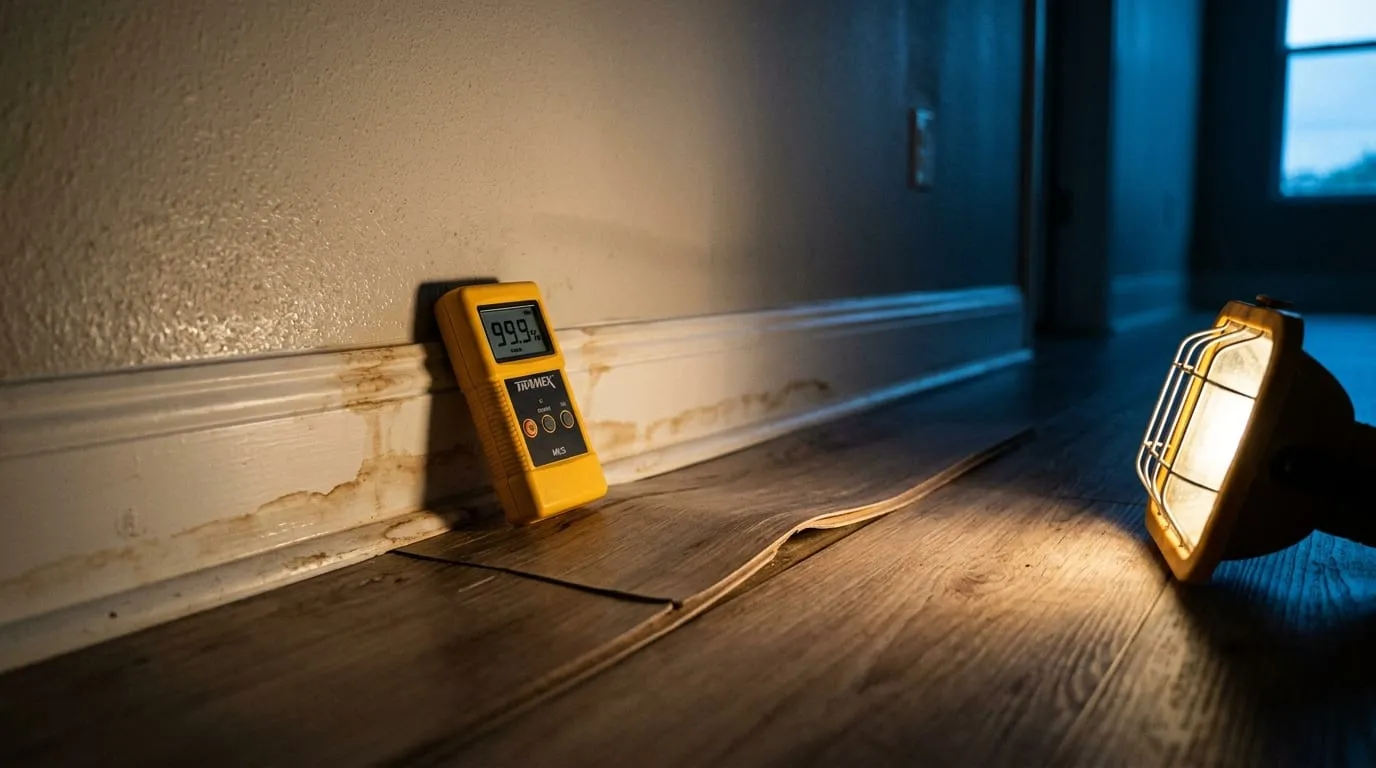
Answered at every hour · rural and western parcels
Well pump repair for South Florida’s western parcels, run from Boca Raton
A private well is really three parts acting as one system (pump, pressure tank and switch), so the fault gets diagnosed by which of the three is misbehaving, never by swapping the priciest part on a guess.
Why does a well pump keep kicking on and off?
That pattern is called short-cycling, and the pump itself is rarely the actual problem. A private well runs on three parts working as one: a pump pulling water up from below, a tank that banks it under pressure so the pump isn’t firing on every single tap, and a switch deciding when the pump runs at all.
Once a pressure tank loses its air charge, or the bladder inside fails, nothing is left to buffer pressure between draws, so the pump kicks on and off within seconds rather than settling into long, even runs. It’s the tank that gave out; the pump only sounds like the problem, and swapping it anyway buys a few quiet days at several times the price a new tank would have cost.
That’s why testing comes before replacing anything. A well has no utility line and no meter to read: the household is the entire system.
What the symptom usually is
Five things a struggling well system does
Each symptom below points toward a different part of the system.
The pump cycles on and off nonstop
Short-cycling. Almost always the pressure tank has lost its air charge, or the bladder inside it has given out, leaving nothing to hold pressure between draws.
Pressure surging up and down mid-shower
The system is running straight off the pump instead of off stored pressure, the same root cause, just felt differently at the fixture.
The pump never seems to shut off
Either the pump has lost its lift, or there’s a leak somewhere between the well and the house that keeps pressure from ever climbing high enough to satisfy the switch.
Grit, sand or cloudy water at the tap
That’s coming from the well itself rather than the household plumbing, and it wears down everything downstream of it, the pump included.
Trouble shows up only when irrigation runs
On larger parcels, the house and the irrigation often share one system sized to satisfy just one of them. It looks like a household fault when it’s really a sizing and isolation problem.
How the diagnosis works
Three readings before anything gets replaced
The sequence exists because the inexpensive part fails far more often than the costly one.
- 01
Read both pressures first
The switch’s cut-in and cut-out numbers, plus how much air charge is left in the tank. Those two readings alone usually separate a tank fault from a pump fault before a single fitting gets opened.
- 02
Confirm what the pump is truly delivering
A pump that never reaches cut-out pressure, or takes far too long getting there, has a different fault than one that reaches it fine and then can’t hold it.
- 03
Replace only the part that actually failed
A tank, a switch or a pump, whichever the readings point to, with the reasoning laid out plainly. Sometimes the honest finding is that the well itself is producing poorly, not the equipment sitting on top of it.
Before you call
What well owners usually ask first
Is the pressure tank always the cause of short-cycling?
Not always, but it’s the least expensive of the three parts to check, so it comes first. Swapping in a new pump when a worn-out tank was the real fault is a classic, costly misstep on a well system, and two pressure readings are usually all it takes to head it off.
If the water just stops completely, who handles that?
On a private well, a plumber and no one else: there’s no utility to report an outage to and no street main to check. Every well household should know where its shutoff, its switch and its tank sit before that call is ever needed.
Where does this actually come up in South Florida?
Mostly the western and agricultural edges, where city water never got built out: the Redland district south of Miami and the acreage across western Broward are where it shows up most. Wells are unusual inside Boca Raton itself, where municipal water reaches nearly every lot, but the territory served stretches out to where that isn’t true.
Can a property be on a well but still on city sewer?
Yes, and the reverse combination happens too, city water paired with a septic tank. Water supply and sewer service are two separate systems, and it’s worth knowing exactly which combination a given property has.
The other half of the property
What a well property usually also needs
A private well and a private septic tank tend to come as a pair.
Live dispatch · 24 / 7 / 365
Pump short-cycling, or no water at all?
From Boca Raton, someone answers at any hour, and nothing gets assumed: cut-in, cut-out and tank charge get checked first, and only the part that actually failed gets replaced.
No obligation. Work performed under Florida plumbing contractor license CFC1433655.