A railway before it was a town
There was little here in any formal sense until the Florida East Coast Railway reached the area in 1896; before that it was fields of pineapples and tomatoes and a fishing settlement.
Broward County · just south of Boca Raton · answered now
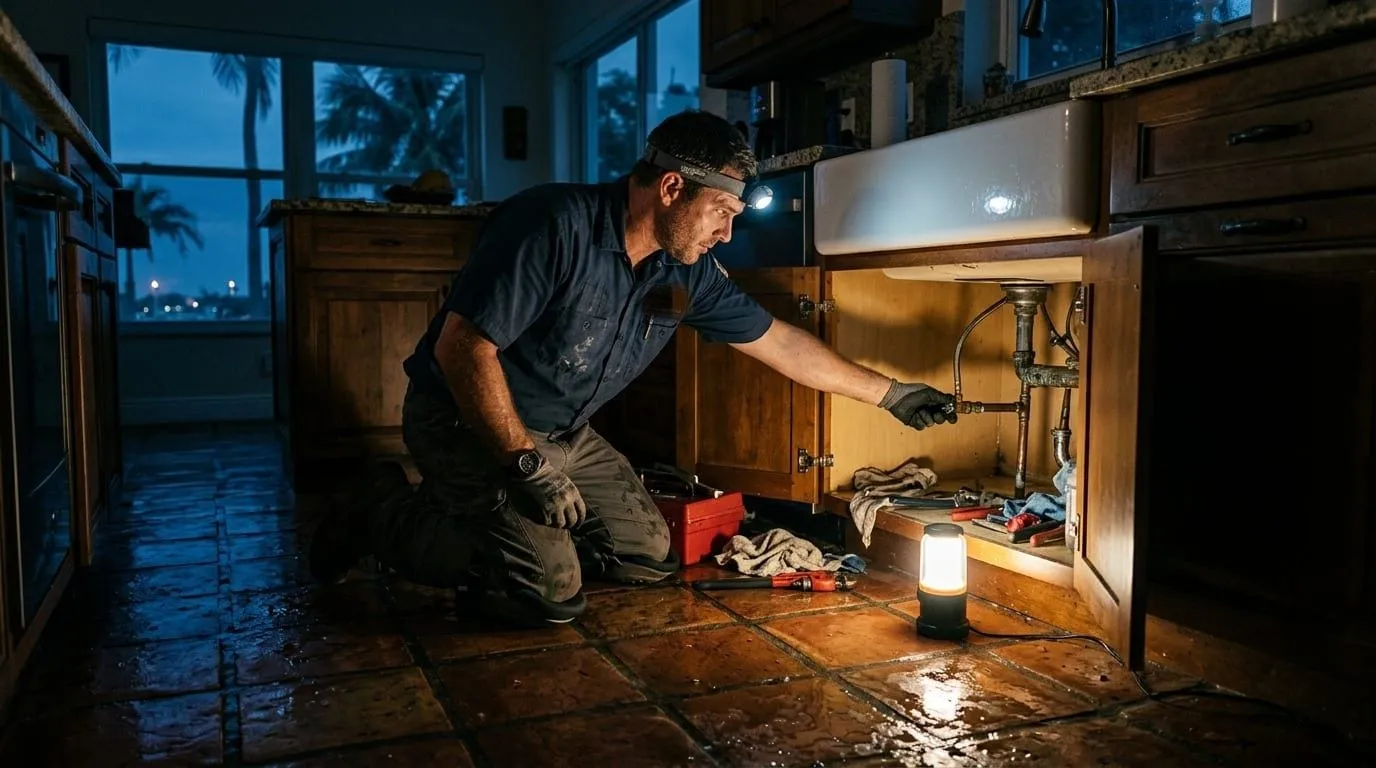
The plumber sent on this call also covers the Boca Raton side of the county line, so a cast iron drain from the 1950s build-out and a galvanized line from the 1920s core get told apart before the van reaches the driveway.
Why is cast iron the safe assumption for a Deerfield Beach drain?
The timeline explains it better than any single address does. Deerfield Beach spent its first decades as a farming and fishing settlement raising pineapples and tomatoes, and did not become a town in any formal sense until the Florida East Coast Railway reached the area in 1896, with incorporation following in 1925. Most of the housing standing today, though, went up later, in a fast build-out between 1950 and 1980.
That thirty-year run happens to match the years South Florida builders leaned on cast iron for drain lines: material rated for forty to fifty years of service that this state’s heat, humidity and soil chemistry tend to wear out closer to twenty-five or thirty. A house from the 1960s here has already used up the shorter estimate.
There is an older layer underneath all of that. Most of the surviving 1920s structures are Spanish Mediterranean Revival, built a generation before cast iron became the standard, and squarely into galvanized-supply territory instead.
What the build years explain
Deerfield Beach carries a 1920s core, a fast post-war middle and a salted coastal edge.
There was little here in any formal sense until the Florida East Coast Railway reached the area in 1896; before that it was fields of pineapples and tomatoes and a fishing settlement.
The oldest standing structures are Spanish Mediterranean Revival, built before cast iron became the standard drain material, which is why that pocket of the city raises galvanized-supply questions the rest of it does not.
The neighborhoods that make up most of the city rose between 1950 and 1980, one after another, which is why so many streets share both an age and an eventual problem.
A project touching a water or sewer connection clears the city’s Engineering Department first, under the code sections covering those connection fees, before a building permit is even issued.
Deerfield Beach Water Utilities operates out of its own building on NE 2nd Avenue and publishes after-hours numbers for both water and sewer.
How it fails here
The decade a house went up narrows the fault before a tool comes out.
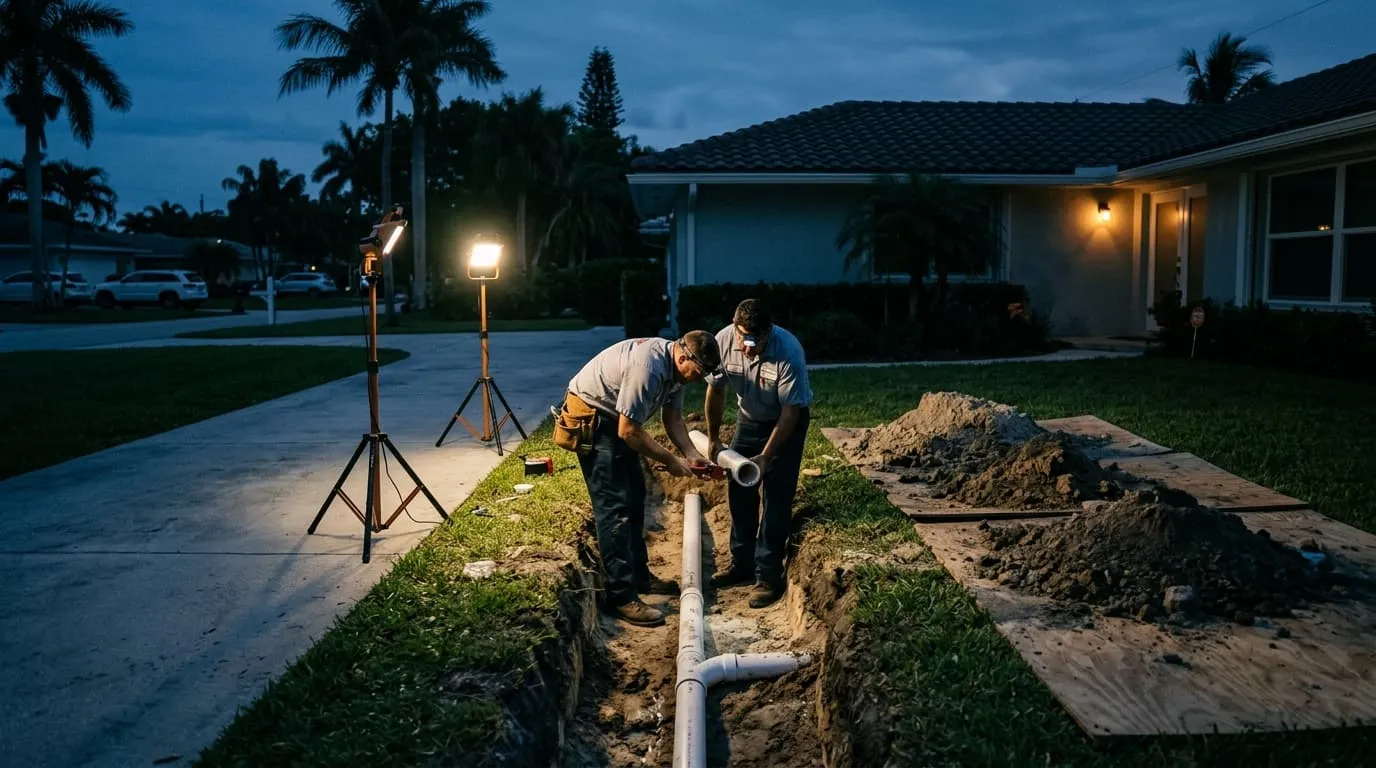
Houses from the 1950-to-1980 push carry cast iron drains rusting from the inside, so the bore roughens and starts catching what should just flow through. Snaking it clears today’s blockage and leaves tomorrow’s exactly where it was.
Request a camera before a third snake job.
Cast iron replacementThat older stock predates copper as the default supply line, so what is narrowing from within is galvanized steel. Nothing breaks in a single day; every fixture just weakens together.
Compare the meter reading against a tap.
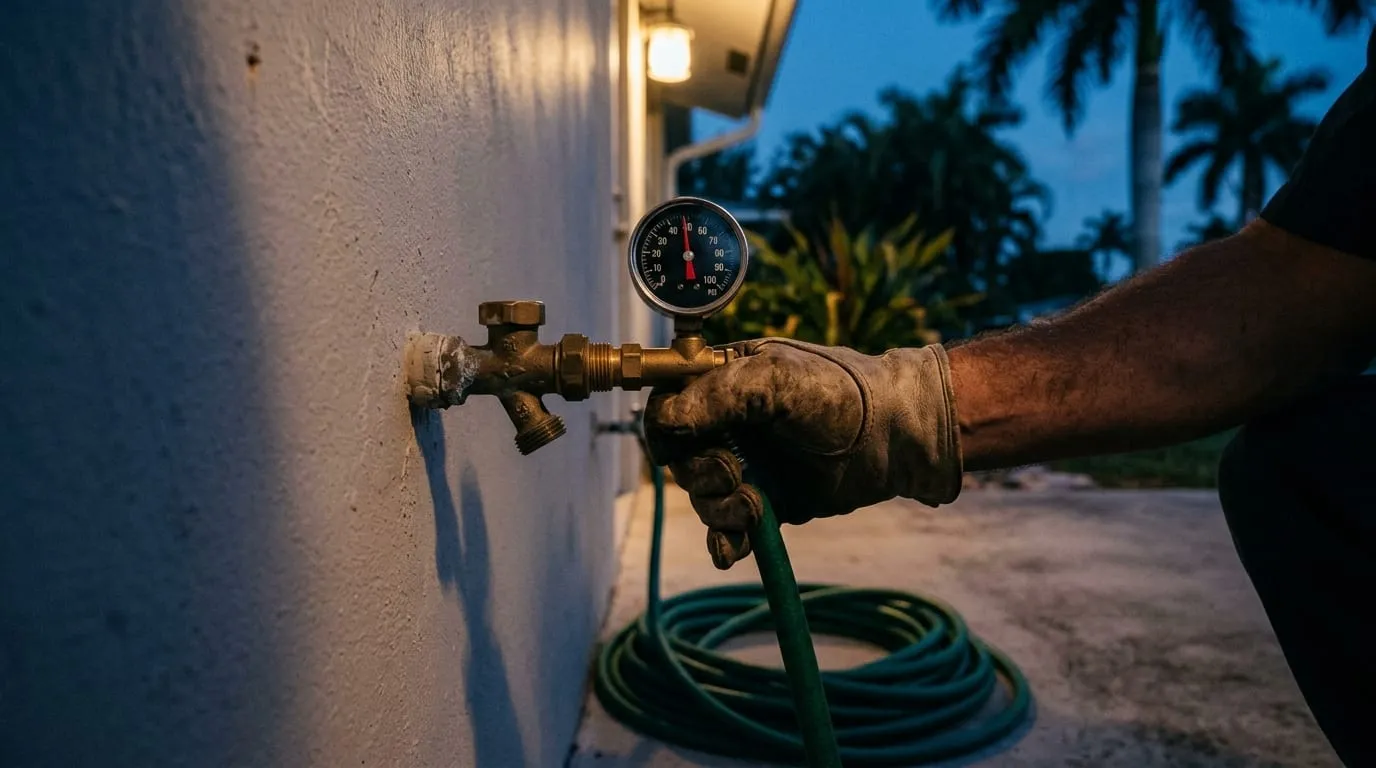
RepipingAlong the beach and the Hillsboro side, salt works on copper supply lines from the outside while the water inside does its own damage, so one pinhole rarely tells the whole story.
Ask what shape the rest of that line is in.
Leak detectionWhere we work
The era of a block says more than the block’s name does.
Spanish Mediterranean Revival survivors, old enough to raise both a galvanized-supply question and a pre-cast-iron drain question at once.
The bulk of the city, raised across the full cast iron window, which is why the same drain call turns up on whole streets within a season of each other.
Where a property line ends and salt air begins doing real work on copper, making the house’s age a weak clue next to its distance from the water.
Who owns what
One city desk handles all three, and the order the steps happen in is what actually matters.
Reviews
Pulled straight from the company’s Google Business Profile, credited to each reviewer’s public name.
A selection of our 5-star reviews on Google.
See all reviews on GoogleId be completely comfortable having them back for future plumbing work. Everything about this visit was straightforward and well handled.
He even explained which work wasn't worth spending money on yet. That's the kind of honesty that makes me want to call someone again.
Nothing about the job looked rushed. From the repair itself to the final testing, everything was handled carefully and professionally.
Questions
Yes. The city lists water heater replacement alongside repiping, sewer repairs and new potable connections as work needing a permit, built to the Florida Building Code and Broward County’s own requirements.
Because the city requires that clearance before it will issue a building permit whenever a water or sewer connection is part of the job. Treat it as step one rather than paperwork alongside step one. It typically sets the whole schedule.
Plan around cast iron drains as the starting assumption. Deerfield Beach did most of its building between 1950 and 1980, which is the cast iron era from one end to the other, so that is the rule here, not the exception.
Yes. The coastal blocks are fully inside the coverage area, and that stretch is also where copper supply lines develop salt-driven pinhole leaks most frequently, since corrosion attacks the pipe from both sides at once.
Nearby
Northern Broward, with three different utility setups within a few miles of each other.
Live dispatch · 24 / 7 / 365
The person who picks up is a short drive from your door, and can walk you to the shut-off while a plumber is routed over.
No obligation. Work performed under Florida plumbing contractor license CFC1433655.