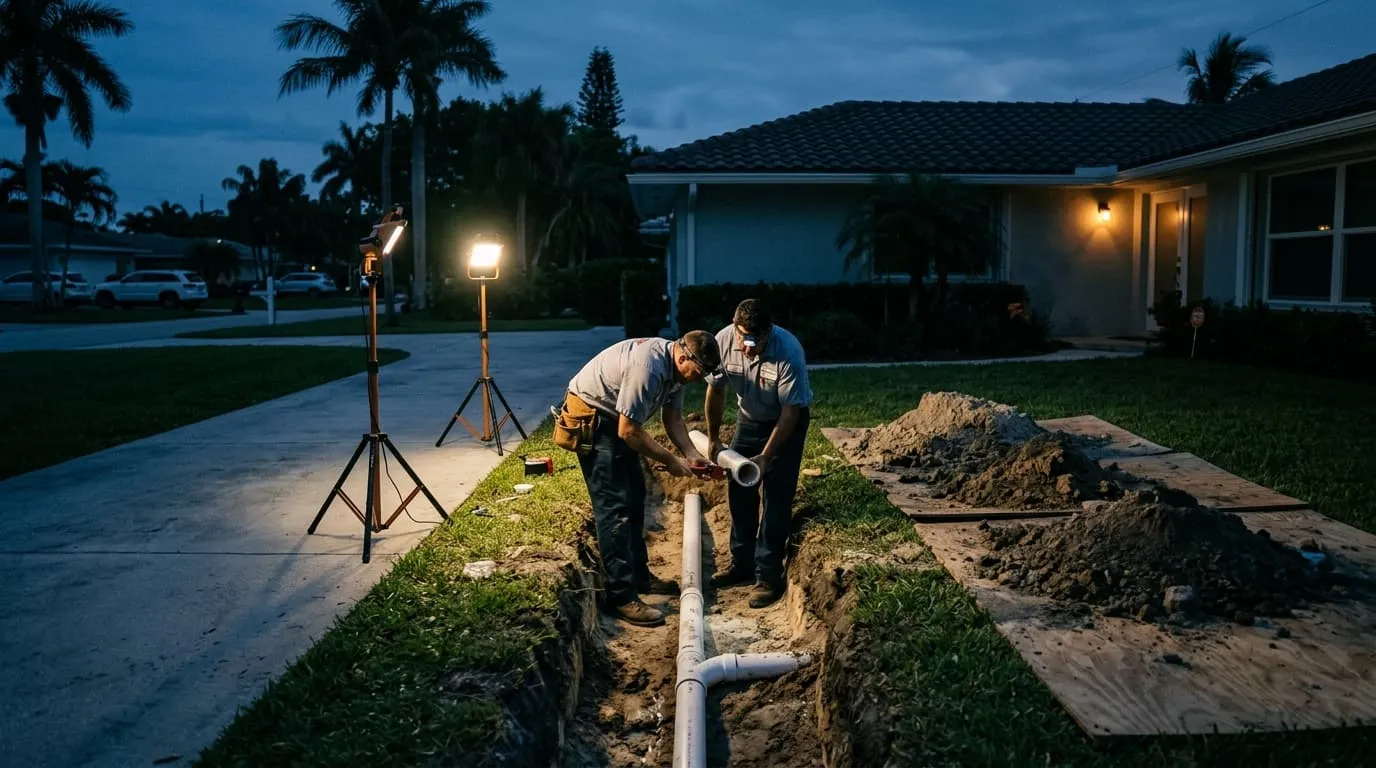
Reported as one of the fastest-growing towns in the US
By 1951 North Miami was already being covered in those terms nationally, and that single stretch of postwar growth accounts for most of the housing that still stands here.
Miami-Dade County · someone picks up, day or night
Dispatch takes the address, confirms it against the city’s own Water and Sewer Division rather than the county’s, and routes a plumber who already expects cast iron behind a postwar wall.
Why is the typical North Miami house postwar, almost to the year?
Because the town grew in a short, intense burst. North Miami existed as a town from 1926 and only reincorporated as a city in 1953, but the years between produced most of the housing standing today. By 1951 national coverage was already calling it one of the fastest-growing towns anywhere in the country. That is a lot of building squeezed into one narrow window.
That window lands squarely in the cast iron era. The material is rated for forty to fifty years, but Florida’s humidity and soil chemistry often push failure to twenty-five or thirty, so a house from that boom is already well past both numbers, and a clog that keeps returning is the pipe talking, not the household.
Underneath that layer sits an older one. A town since 1926 means genuine pre-war stock survives in places, old enough for galvanized steel supply, which fails by slowly closing rather than by bursting.
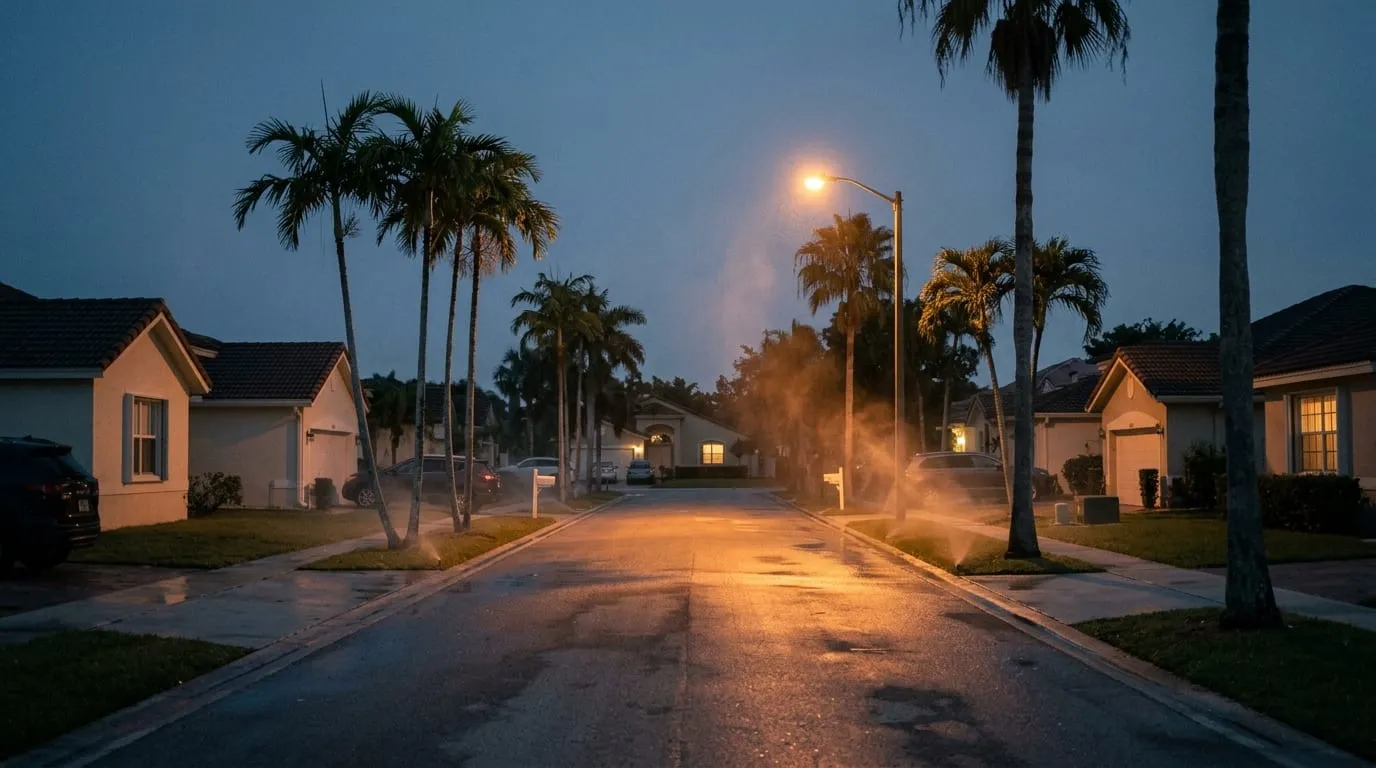
What sits under these houses
The seventh largest city in Miami-Dade, and still one that runs its own utility.
By 1951 North Miami was already being covered in those terms nationally, and that single stretch of postwar growth accounts for most of the housing that still stands here.
That gap leaves pre-war stock sitting underneath the postwar build, old enough in places for galvanized supply lines as well as cast iron drains.
Packed into 8.46 square miles, which alone tells you how many different build dates and lot sizes sit side by side across this city.
The Water and Sewer Division moves treated water out to customers and sewage back to the treatment plant, and the city bundles water, sewer, stormwater and sanitation onto one bill.
The general building permit application does not cover it. Plumbing needs its own separate sign-off, alongside categories like electrical, pools, tanks, air conditioning, roofing, shutters, and windows and doors.
How it fails here
Seventy-plus years after the boom, the pattern is predictable.
Postwar housing here runs cast iron, corroding from the inside until the roughened bore catches what should pass straight through. Clearing today’s blockage leaves the actual cause exactly where it was.
Ask for a camera before paying for a third clearing.
Cast iron replacementSince the town dates to 1926, some houses went up before copper became the standard supply material. Galvanized steel closes off gradually from within rather than rupturing, so pressure fades at every fixture together, with no single date anyone could point to.
Compare pressure at the meter and at a tap.
RepipingWaterfront sections put supply lines in salt air, which attacks copper from the outside while the water inside works on it too. A pinhole in a young-looking line is usually a report on the whole run.
Ask what the rest of the run looks like.
Leak detectionWhere we work
Eight and a half square miles with the bay along one edge.
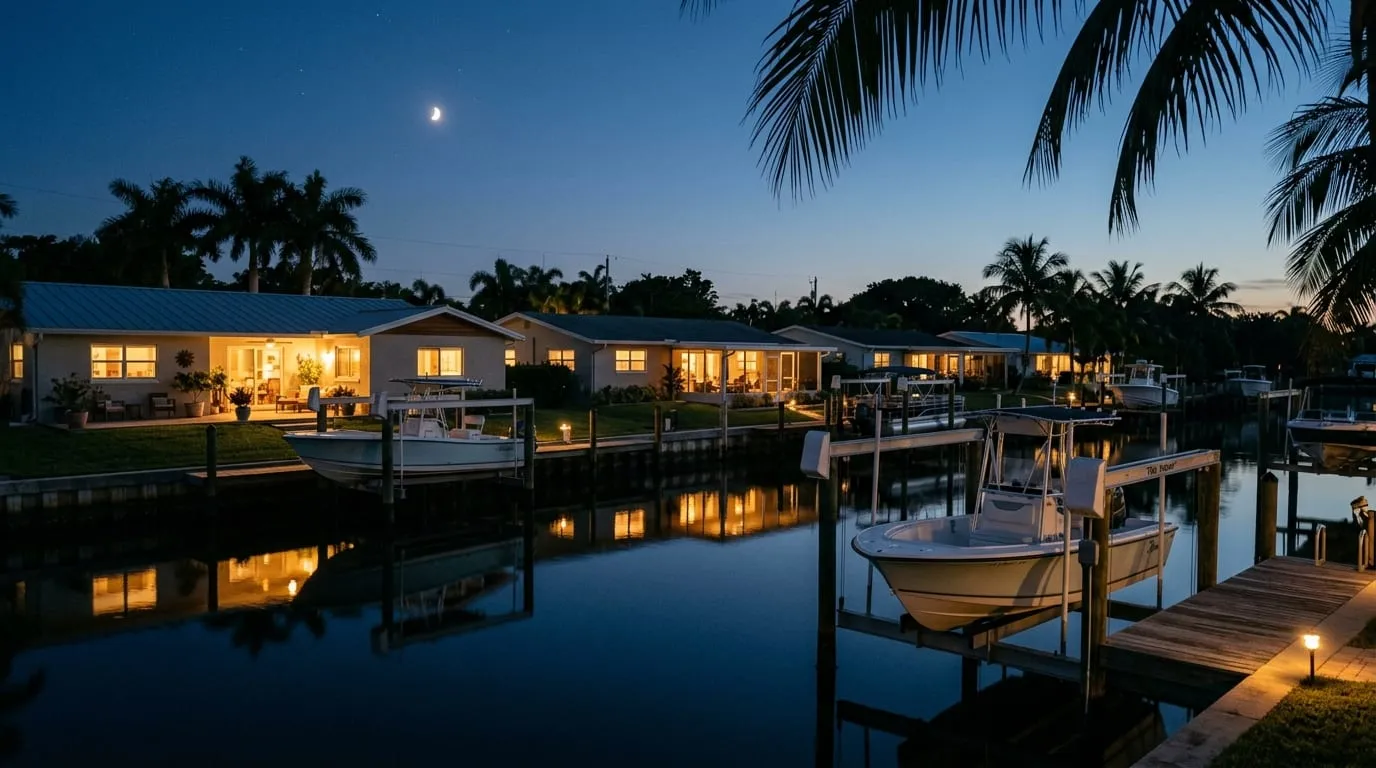
A waterfront section on the bay, where salt reaches supply lines from the outside and the seawall is as much a part of the property as the house itself.
One of the eighteen recognized sections, situated in the part of the city that predates the 1953 charter, a real candidate for pre-war material still in the ground.
Raised during the postwar boom, the same surge that put this city on national lists of fastest-growing towns around 1951, which places it squarely in the cast iron era.
One more of the eighteen, sharing the same low, flat terrain where an escaping slab leak moves through the fill long before it ever reaches the surface.
Who owns what
One of the few Miami-Dade cities that runs its own utility end to end.
Reviews
Quoted from the company’s own Google Business Profile, with each reviewer’s public name.
A selection of our 5-star reviews on Google.
See all reviews on GoogleId be completely comfortable having them back for future plumbing work. Everything about this visit was straightforward and well handled.
He even explained which work wasn't worth spending money on yet. That's the kind of honesty that makes me want to call someone again.
Nothing about the job looked rushed. From the repair itself to the final testing, everything was handled carefully and professionally.
Questions
The city runs it. North Miami maintains its own treatment plant under its own Water and Sewer Division, an uncommon setup in this county that puts the utility and the permitting desk under one roof.
Yes. The general building permit application covers most trades, but plumbing requires a separate application or sign-off, grouped with electrical, pools, tanks and air conditioning. Worth confirming before assuming one form does the job.
Mostly postwar. The city was growing quickly enough by 1951 to make national news for it, and that boom accounts for most of the housing, squarely cast iron territory, with older pre-war stock scattered through it.
Salt works on the outside of the pipe while ordinary water chemistry works on the inside at the same time, so on the bay side proximity to the water predicts a failure better than the age of the house does. It is also a detail dispatch flags before a plumber ever leaves Boca Raton, so nothing about the waterfront comes as a surprise on site.
Next door
Two are on the same water; one is simply larger.
Live dispatch · 24 / 7 / 365
A person answers at any hour, talks you through the shut-off, and a plumber heads to the address.
Nothing to sign yet. Work performed under Florida plumbing contractor license CFC1433655.