Laid out village by village
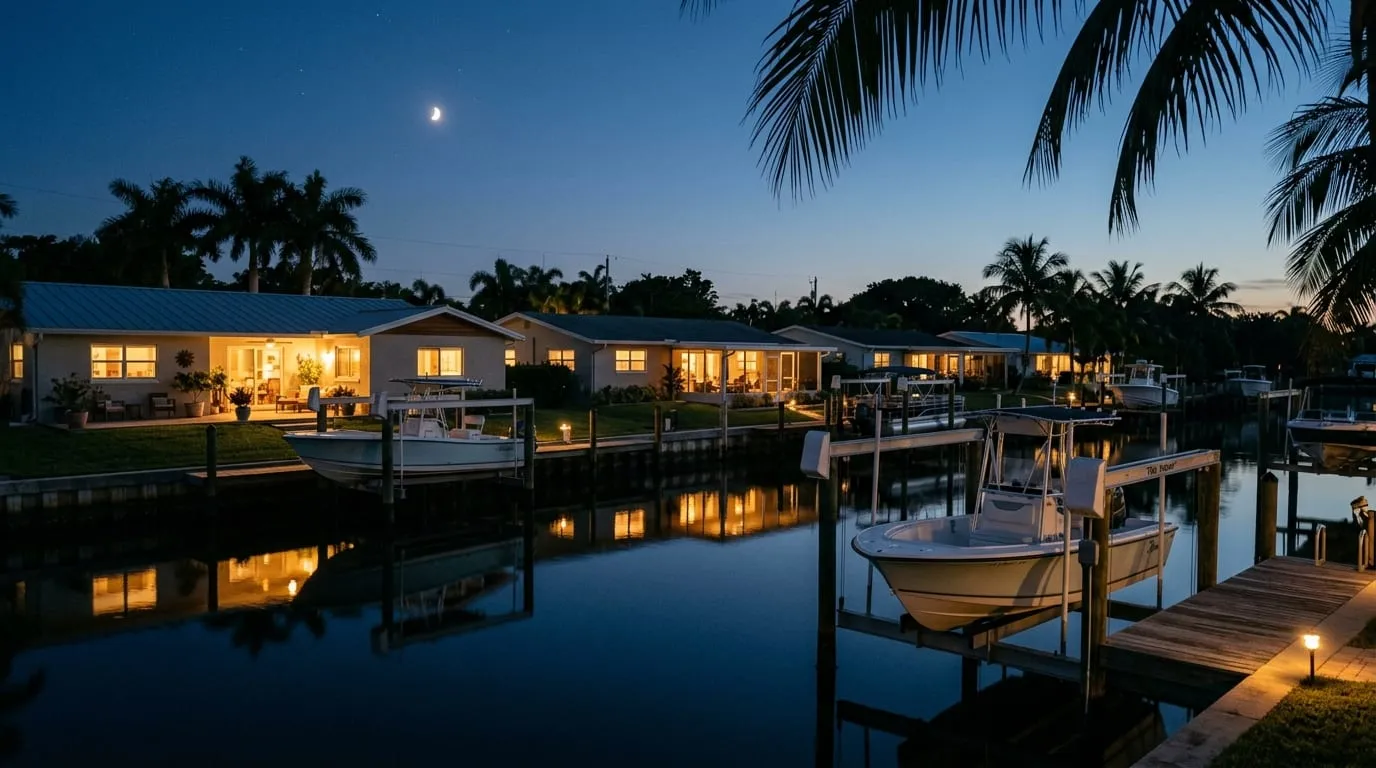
Merrick designed separate residential villages styled after Mediterranean, Italian, French and Dutch South African architecture, while Spanish Renaissance and Mediterranean Revival styling was made mandatory citywide.
Miami-Dade County · answered now
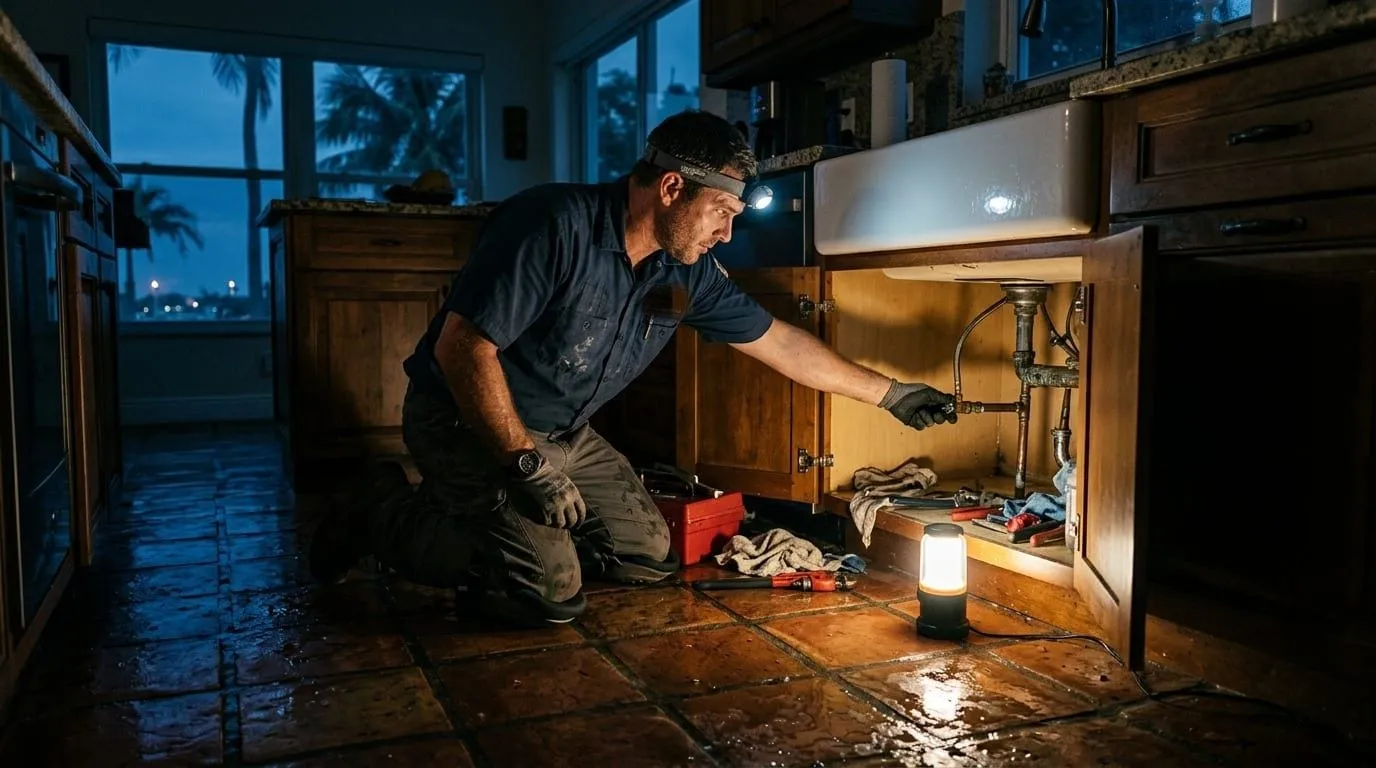
Dispatch stays on the phone while you locate the shut-off, then sends a plumber who already expects 1920s-era material and a preservation ordinance governing anything visible from the street.
Who really owns the water system in Coral Gables?
Miami-Dade Water and Sewer does, even though the envelope says Coral Gables. The county supplies the water and treats what goes down the drain, while the city handles billing, so residents get a city utility bill for a county-run service. Worth knowing, because the name on your bill is not the name of whoever owns the main under your street.
That split carries into permitting too. A plumbing permit that ties into the county system gets a second look from Miami-Dade’s own Department of Regulatory and Economic Resources before it clears, so a single job can touch the city, the county utility, and the county’s regulator, all three.
There is a third party involved as well: preservation. George Merrick laid this city out during the 1920s land boom on City Beautiful principles, and since the first preservation ordinance passed in 1973, a dedicated board and department have existed specifically to keep that founding-era fabric from disappearing.
What’s under these houses
Most of what stands here today dates back to the decade the city was founded.
Merrick designed separate residential villages styled after Mediterranean, Italian, French and Dutch South African architecture, while Spanish Renaissance and Mediterranean Revival styling was made mandatory citywide.
That year brought the first preservation ordinance, later followed by a Historic Preservation Board and its own department. Buildings from the 1920s get preserved here rather than torn down.
There is essentially no slope anywhere in the city, so a slab leak travels sideways through the fill and surfaces wherever the floor happens to give way.
The county supplies the water and handles waste treatment, yet the bill that shows up is a city one. Knowing which organization actually owns the main saves a call to the wrong office.
Across Miami-Dade, upward of 105,000 residential properties still rely on a septic tank. Storms and unusually wet years knock 58,349 of them out of proper working order, more than half the county-wide total.
What breaks here
What happens when century-old houses sit on completely flat ground.
Houses from the founding decade predate copper as the standard supply material. Galvanized steel closes off gradually from the inside rather than bursting outright, so there’s no single day it failed; every fixture just loses pressure in step.
Compare the reading at the meter to a tap.
RepipingNothing drains by gravity at zero feet. Water escaping a pressurized line under the slab travels through the fill until some seam in the floor lets it surface, so the visible wet patch tells you a leak traveled, not where it started.
Get the source located before opening anything.
Leak detectionMore than half of the county’s remaining septic properties stop functioning correctly during storms and wet years. A system that runs fine all summer and backs up every autumn is telling you about the water table, not about anything the household did.
Track whether the problem follows the weather.
Septic servicesVillage by village
Merrick built this city in themed sections, and changing the outside of one isn’t purely a plumbing decision.
Mediterranean, Italian, French and Dutch South African sections, each built to Merrick’s original design. Any exterior change here is a preservation question before it’s ever a scheduling one.
Housing dating to the city’s first decade, when galvanized steel supply and cast iron drains were simply how houses got built; both are live possibilities in exactly the same structure.
West of US 1, rental units and multi-family buildings add daily wear that a century-old infrastructure system was never built to absorb.
Three bodies, one job
It can take three different offices to sign off on a single job.
Reviews
Straight from the company’s Google Business Profile, credited to each reviewer’s public name.
A selection of our 5-star reviews on Google.
See all reviews on GoogleId be completely comfortable having them back for future plumbing work. Everything about this visit was straightforward and well handled.
He even explained which work wasn't worth spending money on yet. That's the kind of honesty that makes me want to call someone again.
Nothing about the job looked rushed. From the repair itself to the final testing, everything was handled carefully and professionally.
Questions
Not exactly. The county, Miami-Dade Water and Sewer, is the one supplying and treating it; the city’s role is billing only, so you get a city bill for what is really a county-run service. For anything touching the main itself, the county is who you’re dealing with.
Usually not, if the work stays inside the walls. Anything visible from the street falls under Historic Preservation Board review instead, and since the city’s building stock is overwhelmingly original to its first decade, that review touches a great many addresses. Confirming beforehand costs far less than redoing finished work.
Because it’s responding to the water table, not to anything happening inside your house. More than half of the county’s 105,000-plus septic properties are in the same boat, Miami-Dade’s own count of systems that stop working correctly whenever a storm rolls through or the year turns unusually wet.
Galvanized steel supply as a genuine possibility, likely paired with cast iron drains, plus a century’s worth of partial repairs done by however many hands touched the house along the way. A camera inspection settles the question faster than any guess.
Close by
Inner Miami-Dade neighbors, every one served by the same county utility.
Live dispatch · 24 / 7 / 365
A person answers at any hour, helps you shut the water off if it comes to that, and sends a plumber to the address.
No obligation. Work performed under Florida plumbing contractor license CFC1433655.