Miami-Dade County · answered now

Emergency plumbing in Miami Beach, older than the plumbing code itself

Dispatch logs the address and checks whether it falls inside the Architectural District, then sends a plumber who already expects 1930s-era material and a preservation review running alongside the permit.

What makes plumbing on Miami Beach different from the mainland?

Two things, age first. Among Art Deco Historic District properties, the first twentieth-century district the National Register of Historic Places ever recognized, stand roughly 800 structures of historical significance, most raised between 1923 and 1943. That means a whole district built before the modern plumbing code existed, and plenty of it still carries original-era material behind the walls.

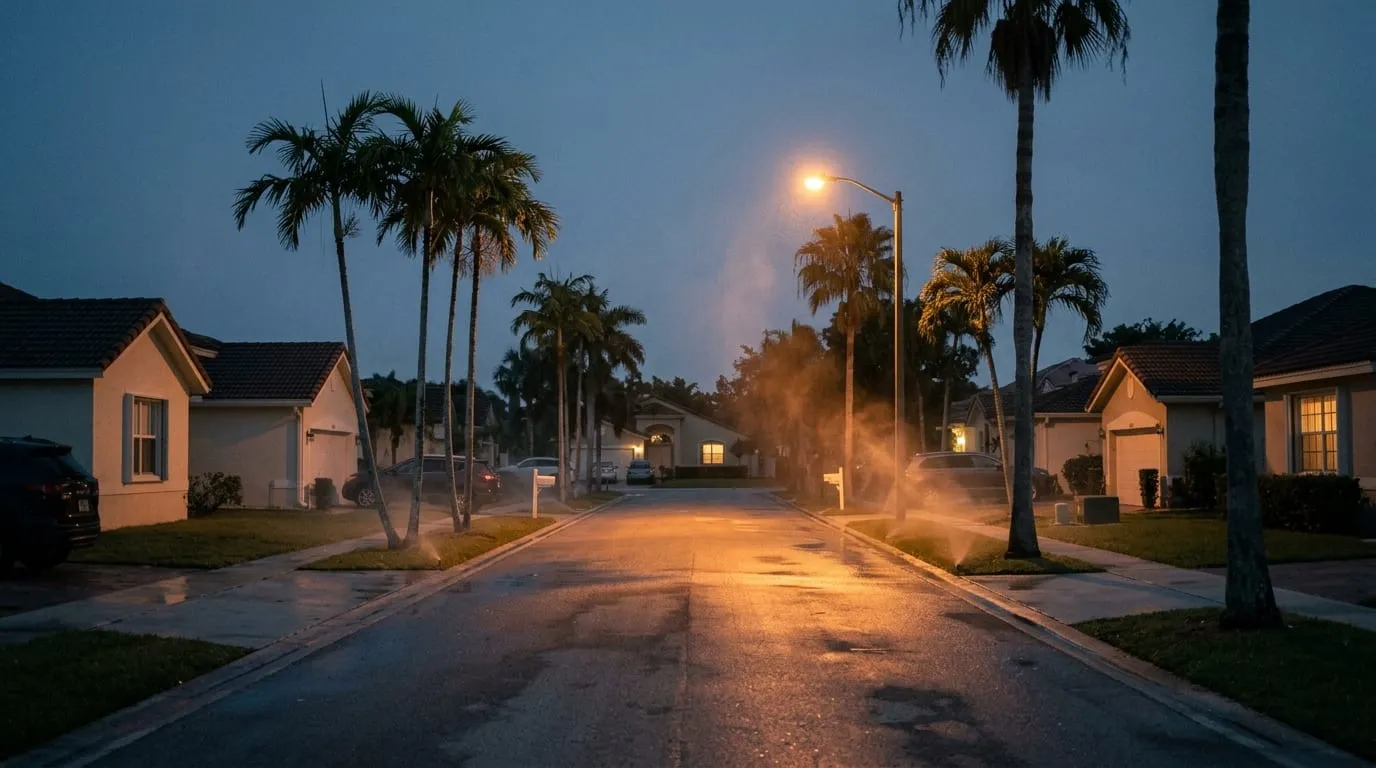
Then altitude, or the near-absence of it. Average elevation across the city is about 4.4 feet above sea level, and some pockets of South Beach sit at nearly nothing, so flooding shows up on an ordinary high tide and not only during storms. A line that fails under a slab has no downhill to drain toward, and salt works on everything from every side.

The third factor is process rather than geology. Anything inside the Architectural District gets reviewed by the Historic Preservation Board in addition to the building department, and the entire city falls inside a High Velocity Hurricane Zone, which limits which products can even be installed.

A spreading ceiling stain and sagging drywall, with a bucket set below to catch the drip

Three eras, one island

7.69 square miles, three architectural eras deep

Look at the building style and you already know roughly what is behind the walls.

About 800 structures on the register

Most went up between 1923 and 1943, inside the very first twentieth-century district the National Register of Historic Places ever recognized. Buildings from that period predate copper as the standard supply line.

Rebuilt after the storm of 1926

Most of the Art Deco stock dates to the 1930s and 1940s, built after the hurricane that leveled much of what stood there before. It is a tightly clustered generation of buildings now closing in on its hundredth year.

Collins Avenue and North Beach came later

Collins Avenue is largely 1940s and 1950s mid-century modern, and North Beach holds pockets of Miami Modern design. Both cohorts arrived after galvanized supply had fallen out of use, squarely into the cast iron drain era instead.

4.4 feet average, and some of it at zero

Average elevation citywide runs about 4.4 feet above sea level, and stretches of South Beach sit at close to nothing at all, enough that tidal flooding is a routine occurrence rather than something only a storm produces.

An actual island only since 1925

The Haulover Cut opened a channel between ocean and bay back in April 1925. This strip runs just 7.69 square miles with salt water pressing in from both banks, so copper pipe here corrodes from the outside as readily as from within.

What breaks, and why

Three ways this island fails

Old material, shared plumbing, and salt water pressing in from every side.

Pressure fading across generations

Pre-war buildings here are old enough that the supply line is plausibly galvanized steel, which narrows shut from the inside instead of bursting. Nothing marks the day it happened; every fixture just loses pressure together, gradually.

Compare the pressure at the meter against a tap.

Repiping

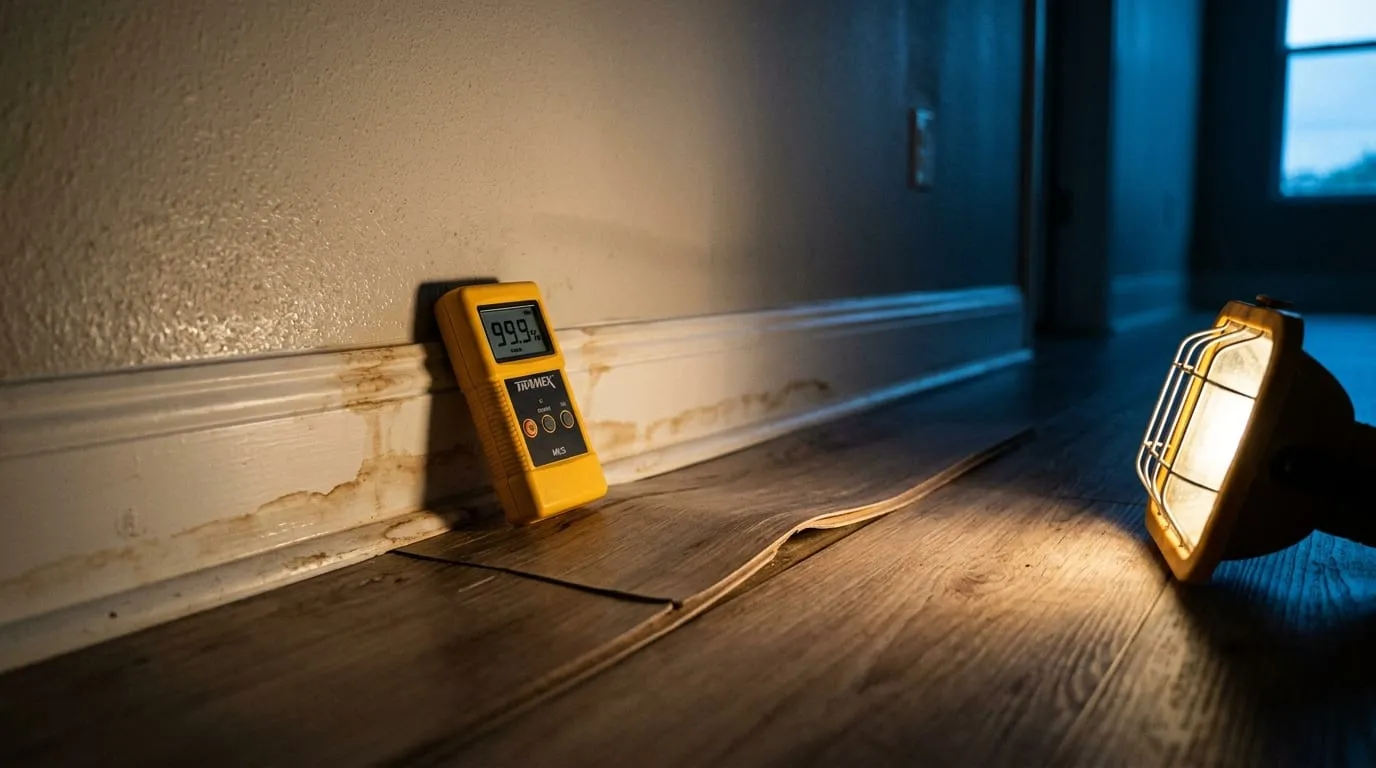
A ceiling leak inside a multi-unit building

The pipe behind it is usually a shared stack or riser, not anything belonging to the unit reporting the damage, so the apartment that calls it in is frequently not the one at fault. That question gets settled before the repair does, because it decides who pays.

Log the time and notify the building.

Leak detection

Repairs that need a preservation sign-off

Anything inside the Architectural District gets a second look from the Historic Preservation Board, on top of the ordinary building department review, run in parallel. Interior plumbing is usually the simple case; changing anything visible from outside turns into a longer conversation.

Confirm the district before anything gets scheduled.

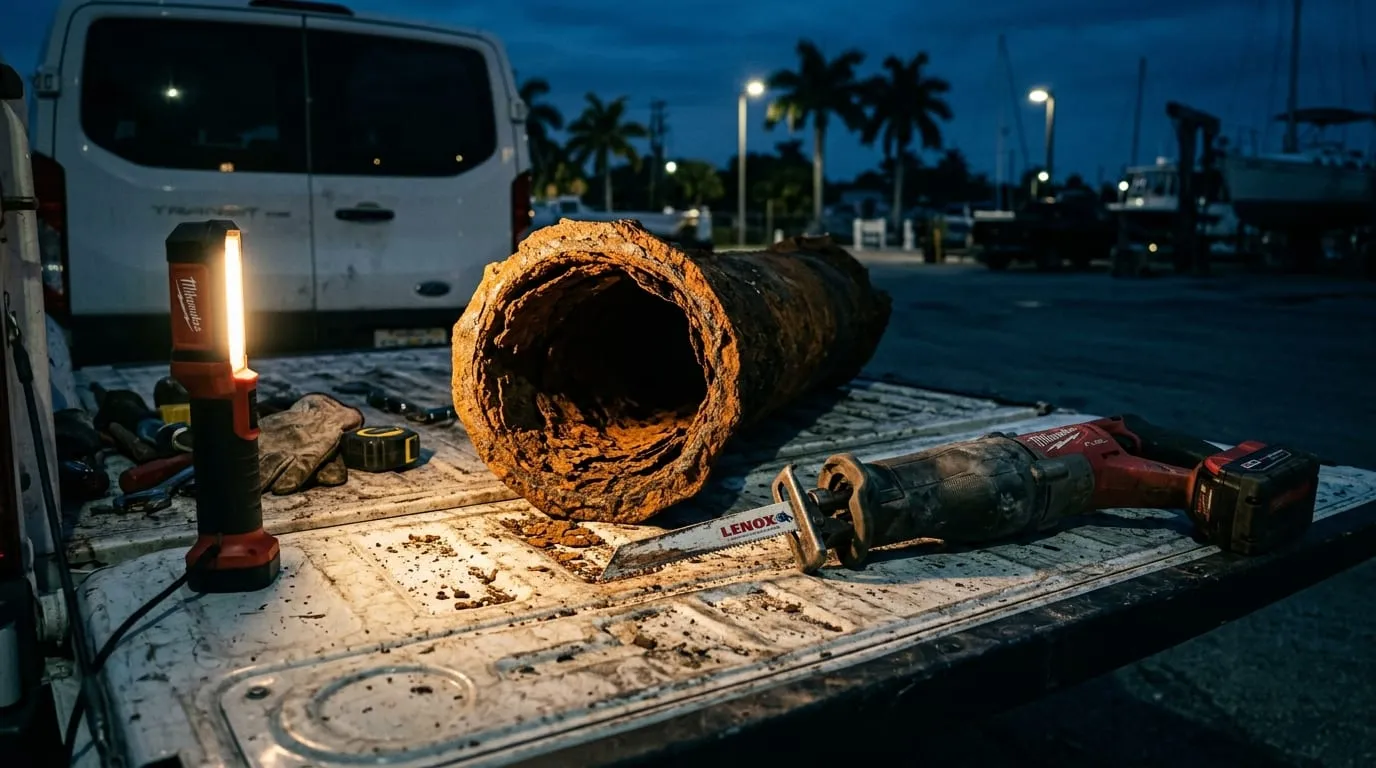
Cast iron replacement

Beach by beach

Three beaches, three building eras

Which part of the island you are on is a good guess at which decade you are in.

  • South Beach and the Art Deco District

    The southern 2.5 square miles, home to most of the roughly 800 listed structures from 1923 to 1943, where a plumbing permit and a historic preservation review move side by side.

  • Mid-Beach and Collins Avenue

    1940s and 1950s mid-century modern construction, cast iron drain territory rather than Deco-era supply, where a clog that keeps coming back is usually the pipe itself talking.

  • North Beach

    MiMo architecture, a still-later generation of buildings, sitting on the same near-zero elevation, close enough to the water table that a slab leak travels a while before it ever shows itself.

Who’s in charge

Permits, water and sewer on Miami Beach

Two separate reviews, and a hurricane-zone rulebook on top.

Water
Miami-Dade Water and SewerWater and sewer accounts here both run through county service, not a city utility.
Sewer
Miami-Dade Water and SewerNew construction, changes of use, and most renovations all go through a county capacity review first.
Permits
Miami Beach Building DepartmentProperties inside the Architectural District or another historic area also get a parallel Historic Preservation Board review.
Products and fixings
High Velocity Hurricane ZoneThat zoning changes which products can be installed at all, worth confirming before ordering materials, not after.
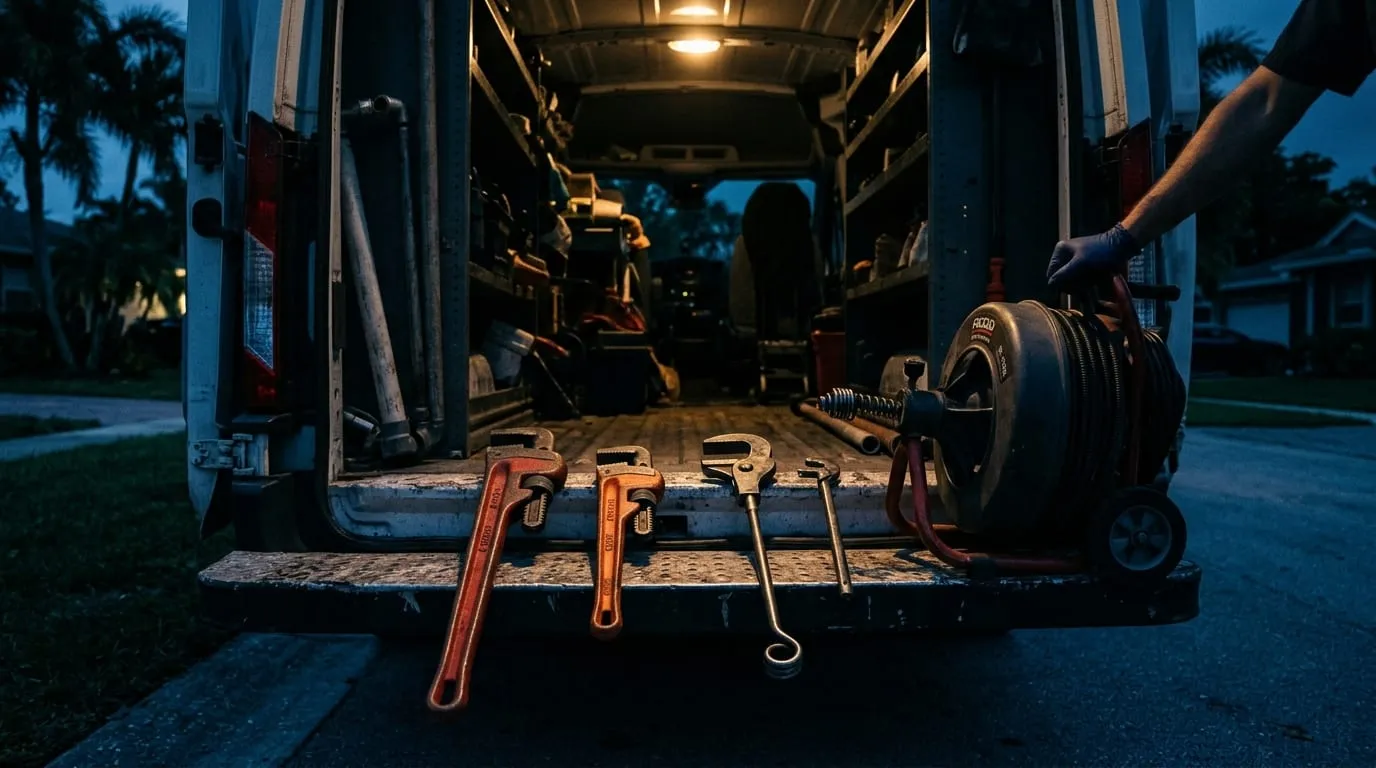
Plumbing tools arranged on a service van’s open tailgate after dark

Reviews

What Miami Beach customers say on Google

Straight from the company’s Google Business Profile, credited to each reviewer’s public name.

5.041 Google reviews

41of the 41 reviews captured from the profile are five stars, and none is below five.

Read straight from the Google Business Profile on August 26, 2026. Counted, not estimated.

Open the Google profile
  • Marcus BryantAugust 2026

    When we attempted to turn off the toilet supply valve, it began leaking. Even as he was checking the toilet connection, the plumber was replacing the valve. Never gets wet, and it works like a charm with the new shutdown.

    Owner replied

  • Luvenia KingMay 2026

    There was a backup in the bathroom downstairs right before weekend guests came. The professional got there earlier than planned and got rid of the blockage without making a mess. …

    Owner replied

  • Christopher BergerJune 2026

    We had hammering noises in the pipes every time someone used hot water. The plumber secured loose sections and installed proper supports to stop the vibration. House is finally quiet again.

    Owner replied

Questions

Asked on Miami Beach

What’s likely behind the walls of a 1930s building here?

Galvanized steel supply is a real possibility, often paired with cast iron drains, and after nine decades there have usually been partial repairs from more than one set of hands. A camera run plus a pressure check will answer it faster than guessing from the building’s age.

Does being in the historic district slow down a repair?

It can, depending on the work. Anything inside the Architectural District goes through the Historic Preservation Board as well as the building department. Interior plumbing is usually the simpler case; changing anything visible from the street is not. Knowing which one you’re dealing with early protects the schedule.

Why does my floor get damp whenever the tide is high?

Because average elevation citywide is only around 4.4 feet, and some of South Beach sits at almost nothing. Tidal flooding is a routine event here, not something reserved for storms, and it tends to change how an existing leak behaves rather than start a new one.

Water’s coming through my ceiling: is that my pipe or the building’s?

In most multi-unit buildings, not yours. Water moves downward, so the source is typically the unit above or a shared riser, and a shared riser is the association’s responsibility. Sorting that out first is what keeps the bill with the right party.

Live dispatch · 24 / 7 / 365

Dealing with a plumbing problem on Miami Beach?

A person answers at any hour, helps figure out which side the problem is on, yours or the building’s, then sends a plumber to the address.

No obligation. Work performed under Florida plumbing contractor license CFC1433655.

(561) 760-1677