
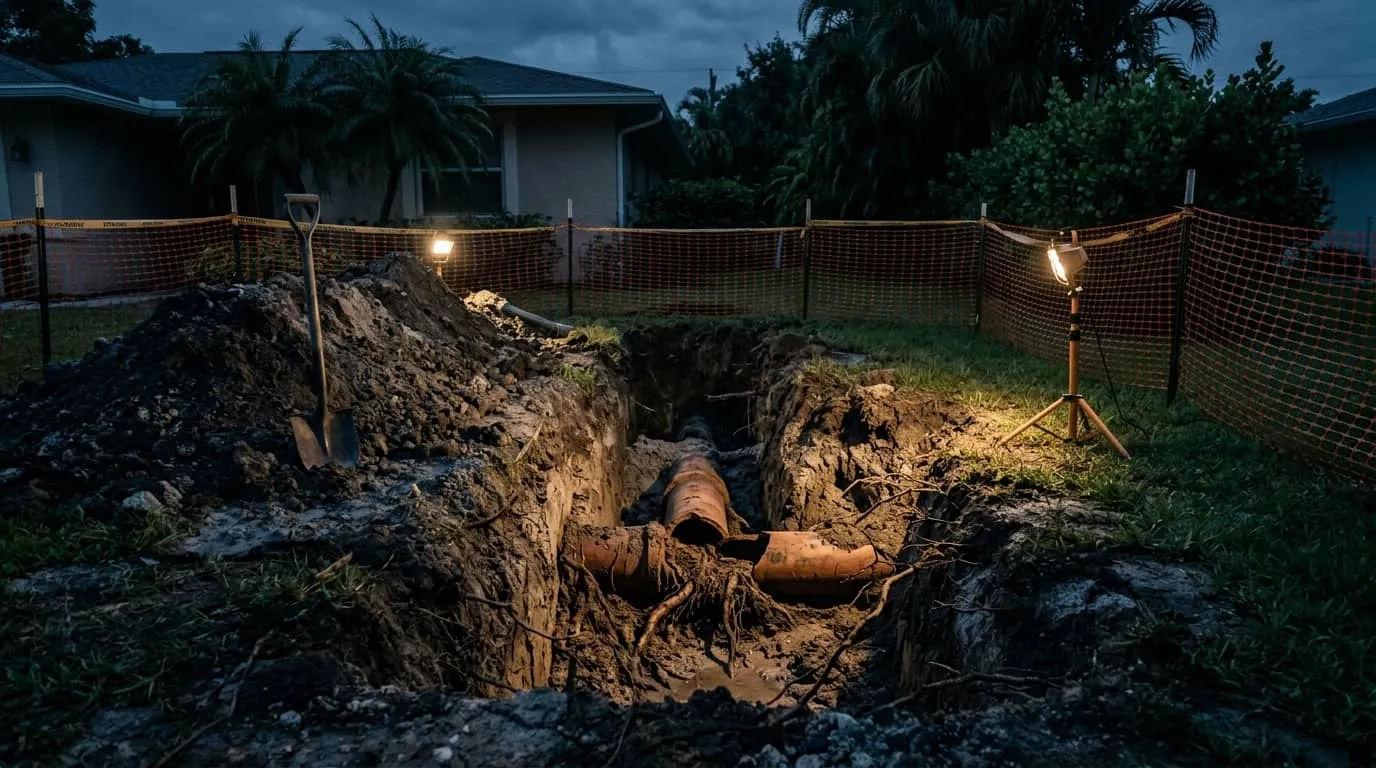
Answered at any hour · the footage decides, not the pitch
Trenchless repair, for a sewer line that can still take a liner
A resin-saturated tube travels the length of the old pipe, then hardens into a standalone replacement running inside it, a method that only works if the line still offers a continuous path for that tube to reach the far end.
Is a sewer line always a candidate for lining, or does it have to be excavated?
One factor settles it: does the run still offer a clear channel for something to be pulled through? Two methods fall under the trenchless umbrella. Cured-in-place lining draws a resin-saturated fabric tube down the old pipe and lets it harden into a replacement shell; it handles cracks, leaks, root damage and a partial collapse. Pipe bursting is rougher: a bursting head shatters the old pipe outward while dragging a brand-new pipe behind it.
Neither method can manufacture a passage where none remains. A run crushed flat, badly out of alignment, or too choked with debris for even a cable to pass through first, needs to come out of the ground. A contractor who claims lining fixes that kind of damage is selling a technique instead of confronting what the pipe is doing.
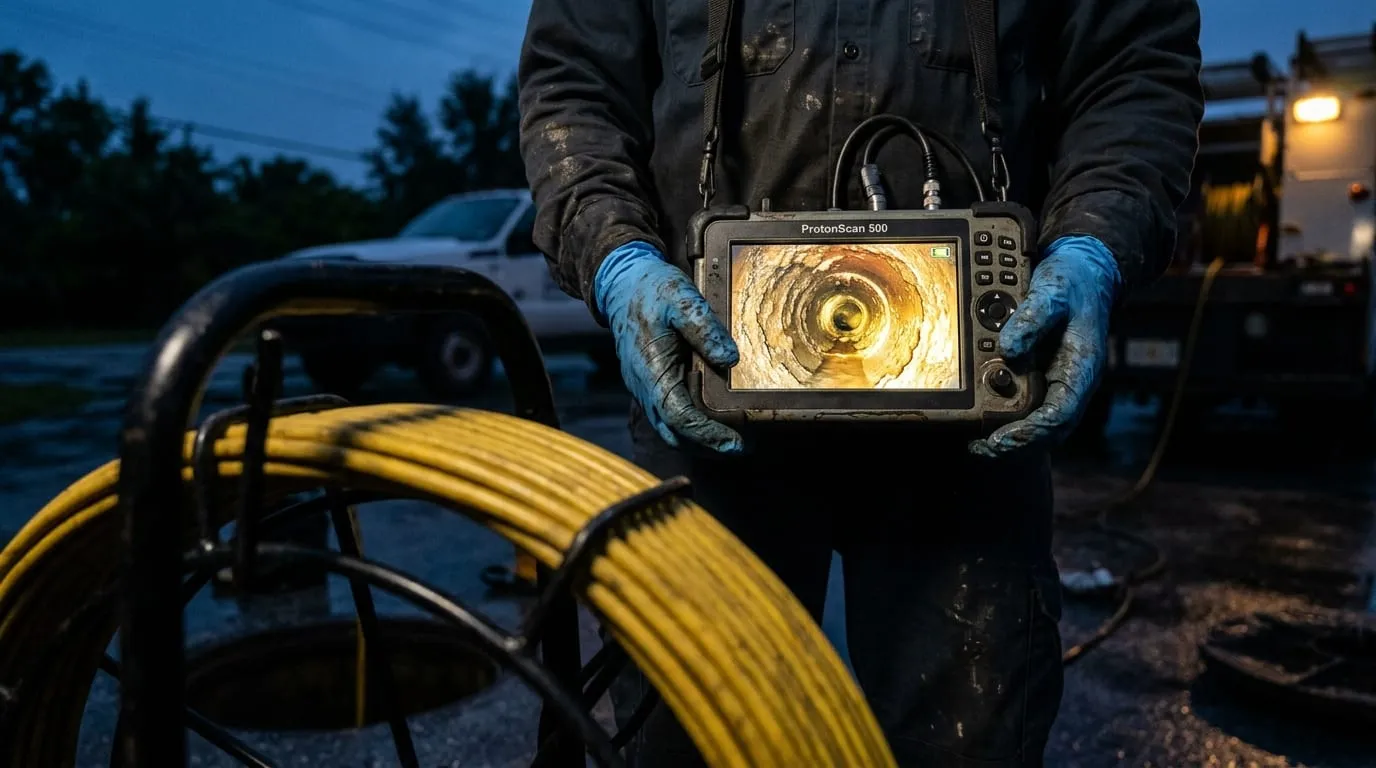
That is why a camera goes down the line before anything is quoted. Nowhere else in a sewer job can the cheapest-sounding answer and the most honest one so easily be two different recommendations.
What the camera is checking for
Five things that decide lining or excavation
Each one nudges the answer toward a liner, or rules it out entirely.
Whether the camera makes it all the way through
A clear run end to end is a good sign a liner can follow the same path. A camera that gets stopped partway is, on its own, close to the whole answer.
Cracking and root intrusion
This is the case lining was made for: the pipe no longer seals, but its shape holds, and a liner rebuilds a continuous wall without any digging above it.
Offset joints
A minor offset can usually still be lined over. A badly offset joint means the two pipe sections no longer line up into one continuous path, and no liner can bridge that gap.
A belly holding standing water
A sagging section that pools water is a grade issue, not a wall issue, and lining over a belly just leaves a smoother version of the exact same low spot.
Where the access points actually are
Lining needs an opening at each end of the run rather than digging along its whole length. On a long lot, that is the difference between a single day of work and a trench cut across the yard.
Questions
What people ask before choosing trenchless
Does trenchless really mean zero digging?
Generally it means two small access pits, one at each end of the run, rather than a trench the whole way. On a lot with mature trees, an established yard, or a driveway sitting on top of the pipe, that gap in disruption is the whole appeal of the method.
How long is a sewer liner supposed to last?
Cured-in-place lining carries a manufacturer-published fifty-year design life. That is an engineering estimate, not a guarantee, and one that assumes the host pipe actually qualified as a good candidate, which is exactly what that camera inspection is there to confirm.
I was told my line can’t be lined. Why not?
Almost always because the camera couldn’t pass all the way through, or it turned up a collapse, a severe offset, or a belly. Those are physical conditions caught on video, not a matter of opinion. It is reasonable to ask to see the footage yourself.
Is lining actually cheaper than digging it up?
Usually less disruptive, which is not quite the same claim, and it depends a great deal on what sits above the pipe: a driveway, a pool deck, mature landscaping. The one thing that should not change is that the method gets chosen based on the footage, not the other way around.
Does lining work on older cast iron sewer pipe?
It is one of the more common uses for it in this climate. Florida’s humidity accelerates cast iron corrosion compared with drier regions, and pulling a liner through a corroding cast iron run skips the slab work a traditional dig-and-replace would need, provided the pipe still qualifies as a candidate.
Related work
The three answers to the same camera finding
Trenchless repair is one branch of a decision that starts with the same inspection every time.
- Sewer camera inspectionthe footage that settles the question above
- Cast iron replacementfor pipe too damaged for any liner to help
- Sewer line repairfor damage that sits farther out, at the lateral
- Hydro jettingclears the host pipe before a liner goes in
- All serviceseverything else we do, nineteen jobs deep
Live dispatch · 24 / 7 / 365
Told your sewer line is beyond repair?
A real person answers, day or night. Getting a camera in first is worth it every time: lining and excavation are entirely different jobs, and only the footage tells you the honest answer.
No obligation. Work performed under Florida plumbing contractor license CFC1433655.