
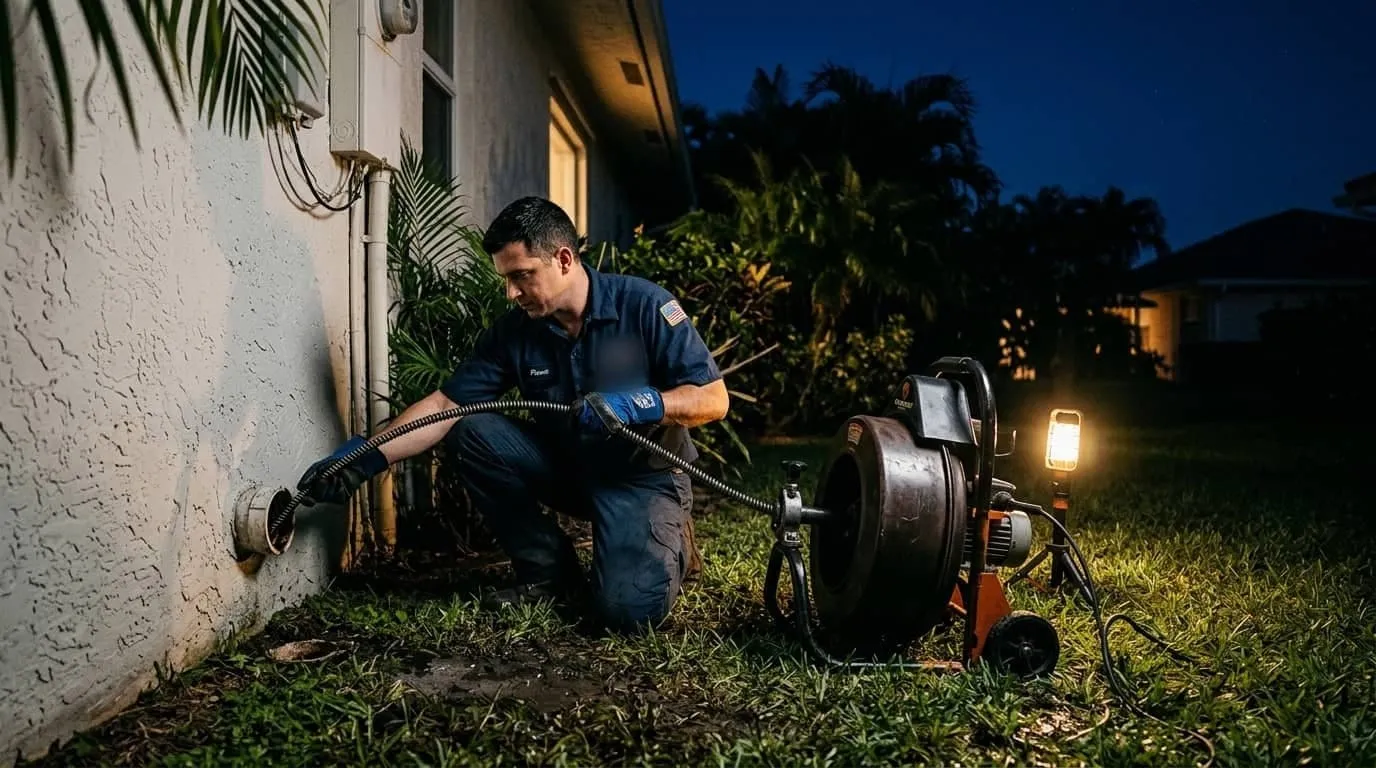
Answered day and night · cleared, and diagnosed
A cleared drain, plus the reason it slowed in the first place
Clearing the line comes first, since that is the call. Diagnosing why it narrowed comes second, and only one of those two jobs usually gets done on a visit. We do both.
Is a slow drain about the fixture, or about the pipe itself?
Start by counting fixtures. When only one sink, shower or toilet runs slow while everything else drains normally, the restriction sits inside that fixture’s own trap or the short branch behind it, and clearing that one spot finishes the job. When two or more fixtures slow down together, especially the lowest drain in the building, the shared line underneath them is the actual restriction, and the fixture is simply where it shows.
That difference decides both the tool and the approach. A local blockage is a cable job, done inside one visit. A shared line that has lost diameter calls for a camera instead, and here is why: South Florida houses built before about 1975 generally drain through cast iron, and a bore that has gone rough and scaled traps debris a newer pipe would simply pass.
A complete drain cleaning answers two questions: what is blocking the line today, and whether the pipe caused it. Only the second answer says whether we will be back.
What you are seeing
What the pattern is telling you, before the pipe is opened
How it fails matters more than how badly it is failing.
Just one drain, slowing down
This is local. Hair, soap film or food waste has narrowed the trap or the short branch feeding it, and once that is cleared there is genuinely nothing left to fix. The rest of the house was never involved.
More than one fixture, together
This points at the shared line rather than any single fixture. Whatever sits lowest in the building, often a shower pan or a floor drain, tends to report it first, simply because it has the least room to back up before anyone notices.
The same drain, again and again
A blockage that returns on something close to a schedule means the last visit opened a path through the problem instead of removing it. Whatever narrowed the line the first time is still sitting there, quietly doing it again.
A gurgle from a fixture you did not touch
That sound is air being pulled backward through a trap because the line cannot vent properly while it drains. It is rarely the fixture making the noise, usually a partial blockage or a venting issue further along the run.
A sewer smell with nothing actually blocked
A trap that has dried out, or a seal that has failed, lets gas drift back into the room even while water moves through the line just fine. Nothing poured down a drain will touch this, because it is not a clog.
Questions
Straight answers before you call
Is it worth pouring in a chemical cleaner first?
We would steer you away from that, especially in older cast iron. It tends to sit on top of a blockage rather than clearing it, so the restriction is often still there once someone finally opens the line, and on a pipe that is already thinning from the inside, the chemical is working on the metal about as much as it is working on the clog.
Why does the same drain keep blocking?
Most often because the earlier visit cut a path through whatever was narrowing the line, rather than restoring it to full width. If grease is coating the wall or scale has roughened the bore, the pipe is still tighter than it should be, and it will close again on its own timeline, not yours.
Does every clog need a camera inspection?
No. For one slow fixture, a camera would just add cost for no reason. But the second or third time the same line closes, it stops being optional; it is the only way to see what is actually narrowing the pipe, instead of paying to reopen it again in a few months.
At what point does a clog become an emergency?
One slow fixture can usually wait for a normal appointment. Sewage rising back into the building cannot, and the most useful thing to do in that moment is stop running water anywhere on the property, since every flush or load of laundry adds more to a line that already has nowhere to send it.
Related work
Where a drain call usually leads next
Clearing the line is often the start of the conversation, not the end of it.
- Drain clog repairfor the fuller case on clogs that keep returning
- Sewer camera inspectionworth booking once a line has closed twice
- Hydro jettingfor a wall coated in grease rather than a single blockage
- Cast iron replacementfor when the pipe itself is the reason it keeps closing
- All servicesnineteen more, from water heaters to backflow
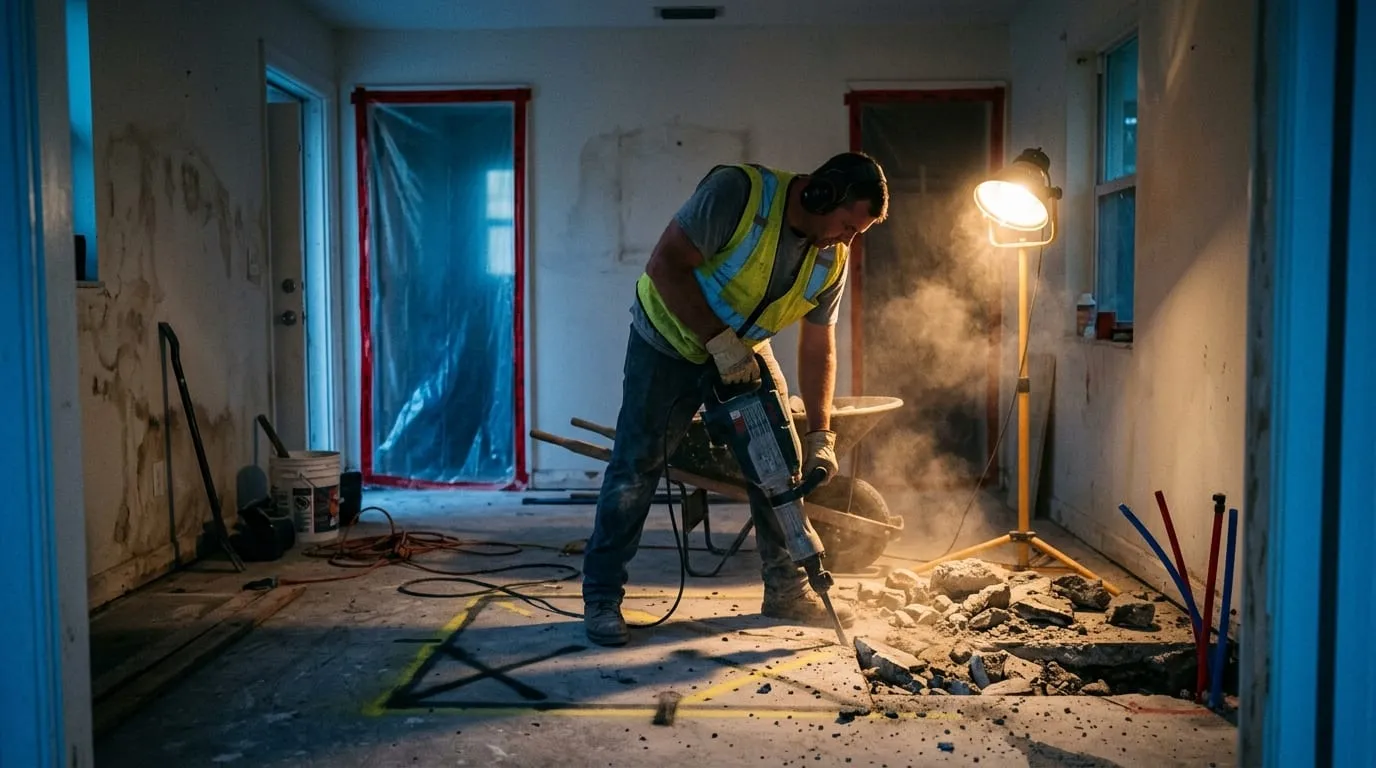
Live dispatch · 24 / 7 / 365
A drain running slow, or not at all?
A person picks up at any hour. Telling us how many fixtures are affected is the one fact that shapes most of the rest of the visit.
No obligation. Work performed under Florida plumbing contractor license CFC1433655.