A store and a post office, 1897
Wilson Alexander Larkins is the reason this place exists on any map at all, and the settlement carried his name for years before anyone called it South Miami.
South Miami · well down our coverage map · answered now
A dispatcher takes down the address and the symptom, coaches you toward the shut-off while help is on the way, and sends a plumber from Boca Raton who treats a 1920s block differently from a 1950s one two streets over.
How do you tell a pre-war South Miami house from a post-war one?
By its decade, more than by its street. Wilson Alexander Larkins put this place on the map in 1897 with the first store and the first post office, and the settlement carried the names Manila and later Larkins long before it took the name South Miami with its 1920s incorporation. Boca Raton Emergency Plumbing SFL dispatches from roughly forty-seven miles up the coast, with work performed under Florida plumbing contractor license CFC1433655.
Cambridge Lawns went up in 1928, roughly thirty houses in Tudor and Mediterranean Revival styles that earned historic status in 2005 and are old enough to carry galvanized supply lines. Everything else mostly dates to the mid-1950s, when the city tipped from rural to suburban within a few years and cast iron drainage went into the ground under most of what stands today.
Knowing which decade built the house beats guessing from the block it sits on.
A small city, two eras
The city limits are small enough that a single block can jump fifty years.
Wilson Alexander Larkins is the reason this place exists on any map at all, and the settlement carried his name for years before anyone called it South Miami.
About thirty Tudor and Mediterranean Revival houses, protected as historic since 2005 and old enough to still hold galvanized pipe rather than copper.
A bank, new commercial buildings and a hospital arrived almost at once, and the housing built in that same stretch is what put cast iron drainage under most of the city.
Miami-Dade Water and Sewer serves this address even though South Miami itself decides on the building permit.
More than 105,000 Miami-Dade homes still rely on septic systems, and 58,349 of those stop working reliably whenever the ground gets wet.
Two eras, three calls
The build year decides the diagnosis before anyone touches a wrench.
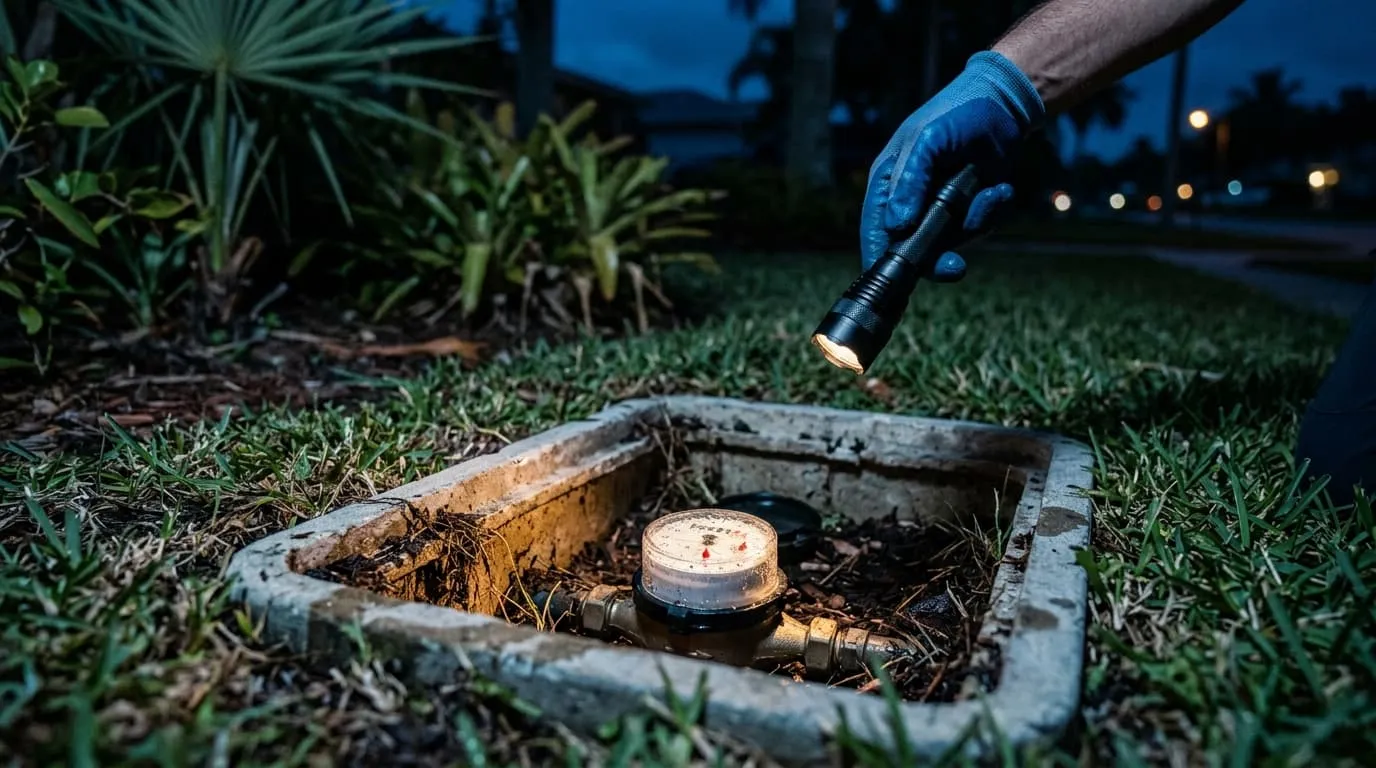
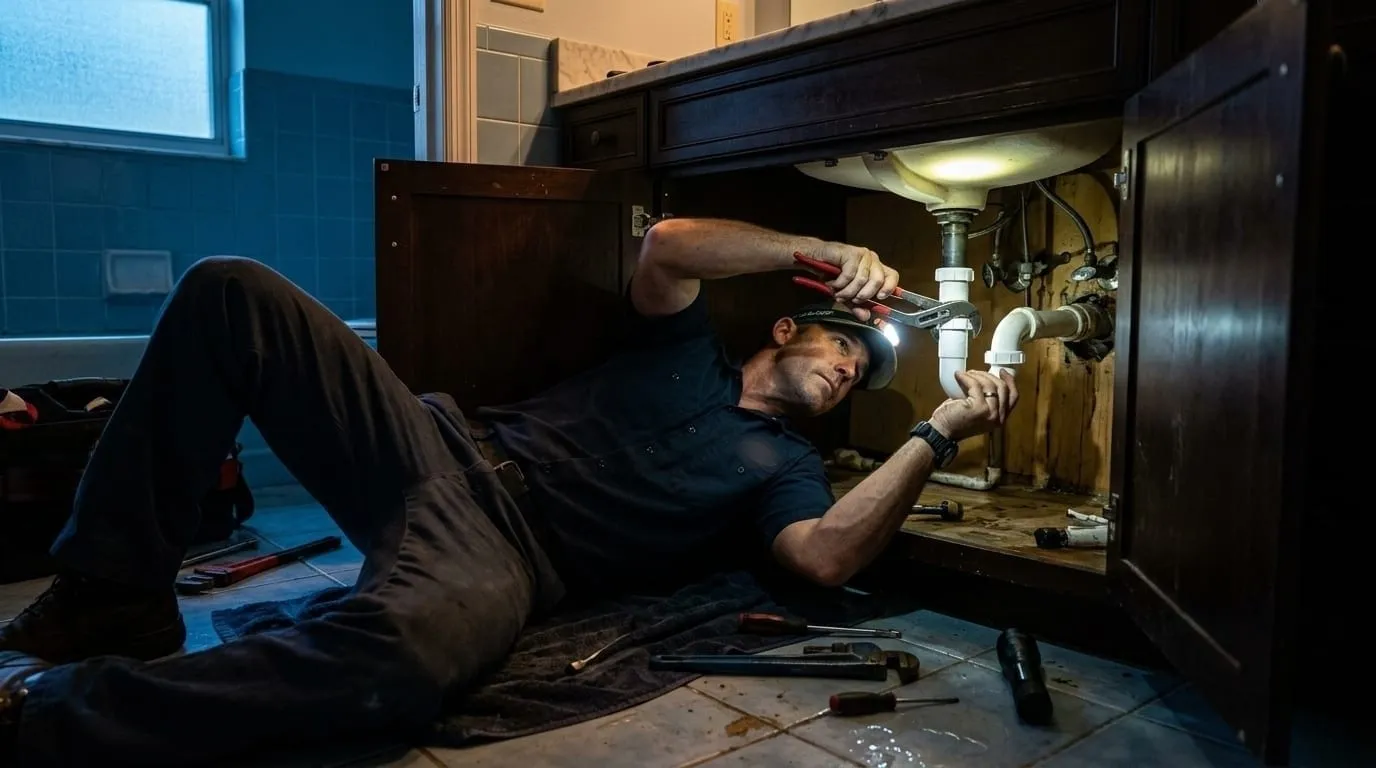
Mid-century houses here run on cast iron, and rust builds up on the inside of the pipe until the channel narrows enough to catch anything solid. A cable clears today’s blockage and leaves tomorrow’s sitting in the same spot.
Ask for a camera before paying for a third clearing.
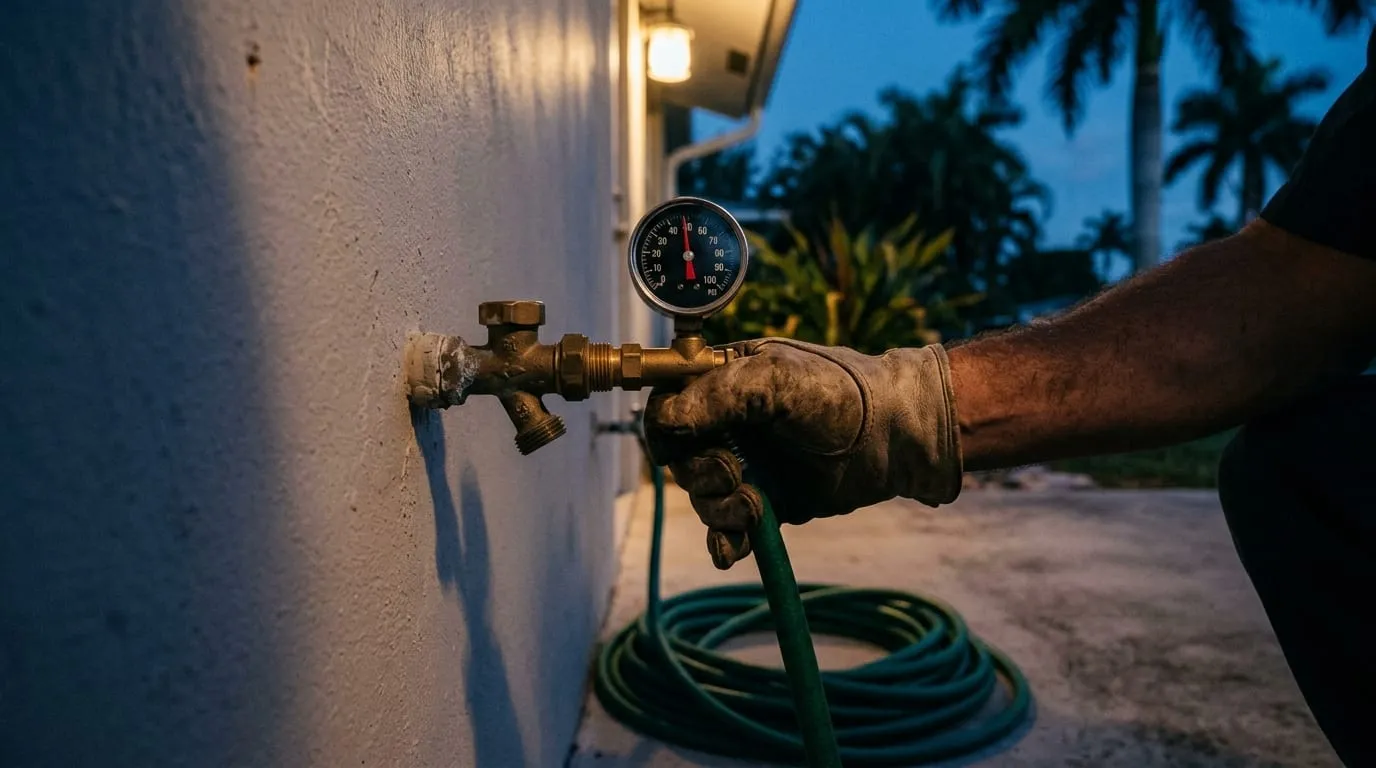
Cast iron replacementThe pre-war houses predate copper as the standard supply line, so galvanized steel is closing from the inside a little at a time. Every fixture loses pressure together, which is exactly why no one can name the day it started.
Compare pressure at the meter and at a tap.
RepipingSmall lots keep the run from the house to the main short, but short is not the same as new. A lateral laid in the 1950s has spent seventy years under the same trees as everyone else’s.
Ask for a camera, not another cable.
Sewer line repairReading the blocks
In a city this size, you can walk from one decade into another in a few short blocks.
About thirty 1928 houses in Tudor and Mediterranean Revival style, protected as historic since 2005, and among the few streets here old enough to still carry galvanized supply.
One of the few named pockets within South Miami’s compact 2.27 square miles, where small parcels mean a short run to the main, though short does not mean new.
The housing that arrived the same years the city gained a bank and a hospital, and the part of town squarely inside the cast iron era.
City permit, county pipe
The building department is the city’s. Nearly everything underground belongs to the county.
Reviews
Straight from the company’s own Google Business Profile, credited to each reviewer by name.
A selection of our 5-star reviews on Google.
See all reviews on GoogleId be completely comfortable having them back for future plumbing work. Everything about this visit was straightforward and well handled.
He even explained which work wasn't worth spending money on yet. That's the kind of honesty that makes me want to call someone again.
Nothing about the job looked rushed. From the repair itself to the final testing, everything was handled carefully and professionally.
Questions
Start with the year it was built. The 1928 houses in Cambridge Lawns can still hold galvanized steel supply; the blocks that filled in around the mid-1950s are the cast iron generation. Either one is old enough to be worth an inspection rather than a guess.
Shorter, not simpler. The lateral is usually exactly as old as the house above it, and it has spent that whole time under the same mature trees as every other yard on the block. Age matters more than length here.
Two different desks for two different things. South Miami’s building department handles the permit, while the actual water main and sewer main answer to Miami-Dade Water and Sewer. Knowing the split in advance saves a wasted call.
Countywide, yes. The Miami-Dade total tops 105,000 properties still using septic, and over half of those stop working properly whenever it rains hard or the water table climbs. A system that only backs up in wet weather is telling you about the ground, not about the house.
Just outside the city limits
All three neighbors sit on the same county utility this city does.
Live dispatch · 24 / 7 / 365
A person answers no matter the hour, talks you through the shut-off, and gets the closest plumber on the way.
No obligation. Work performed under Florida plumbing contractor license CFC1433655.