An upscale resort in the 1920s
Hialeah incorporated in 1925 as a playground for the wealthy, and that original stock predates copper as the default supply material entirely.
Miami-Dade County · the phone is answered, day or night
Dispatch runs the full length of the county map from Boca Raton to reach Hialeah, and it still opens with the address and a question about which of two building eras your parcel falls into.
What decides what kind of pipe sits under a Hialeah house?
Which of two very different building eras it belongs to. Hialeah’s first phase came in the 1920s, when the city was incorporated as a playground for the wealthy, leaving behind housing old enough to predate copper as the standard supply. Its second and far larger phase began in the 1960s, driven by successive waves of Cuban immigration that continued into the 1970s, 1980 and the late 1990s.
That second phase makes up most of the city today, and it straddles the exact point where South Florida’s drain material switched from cast iron to PVC, which is why the year a house went up matters more here than which street it sits on.
One condition covers all of it regardless of era: zero feet of elevation. With 223,109 people packed onto 21.58 square miles and no gradient anywhere, water escaping under a slab travels sideways rather than down.
Two eras, one flat city
Two building booms, four decades apart, on ground that never rises above sea level.
Hialeah incorporated in 1925 as a playground for the wealthy, and that original stock predates copper as the default supply material entirely.
Driven by successive waves of Cuban immigration beginning in 1959 and continuing through the 1960s, 70s, 1980 and the late 1990s, this expansion makes up most of the city and straddles the point where drains switched from cast iron to PVC.
The lowest ground of any large city in the coverage area, which means there is no gradient anywhere and a slab leak surfaces wherever the floor happens to give.
More than 230,000 residents across some 23 square miles draw from the Department of Public Works, and its reach does not stop at the city limit: pockets of unincorporated Miami-Dade County are on the same system.
Manufacturing and textile plants dominated through the 1970s and 1980s and have mostly moved on, leaving behind premises whose drainage was sized for a load they no longer carry.
How it fails here
Sea-level ground and a split building history do the rest.
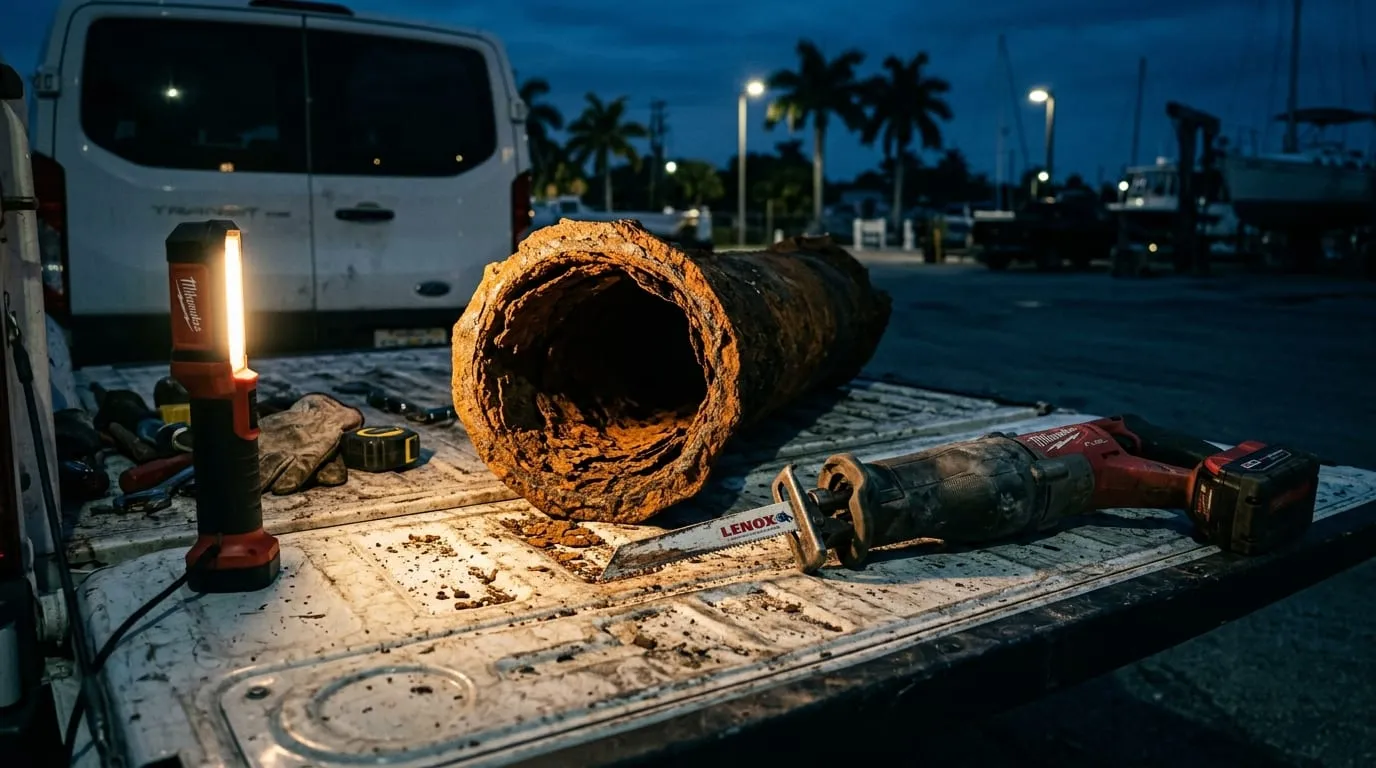
The earlier houses from the post-1960 building wave run cast iron drains, and decades of internal corrosion leave the bore rough enough to snag what should flow straight through. Whatever gets cleared out today has already regrown by tomorrow.
Ask for a camera before a third clearing.
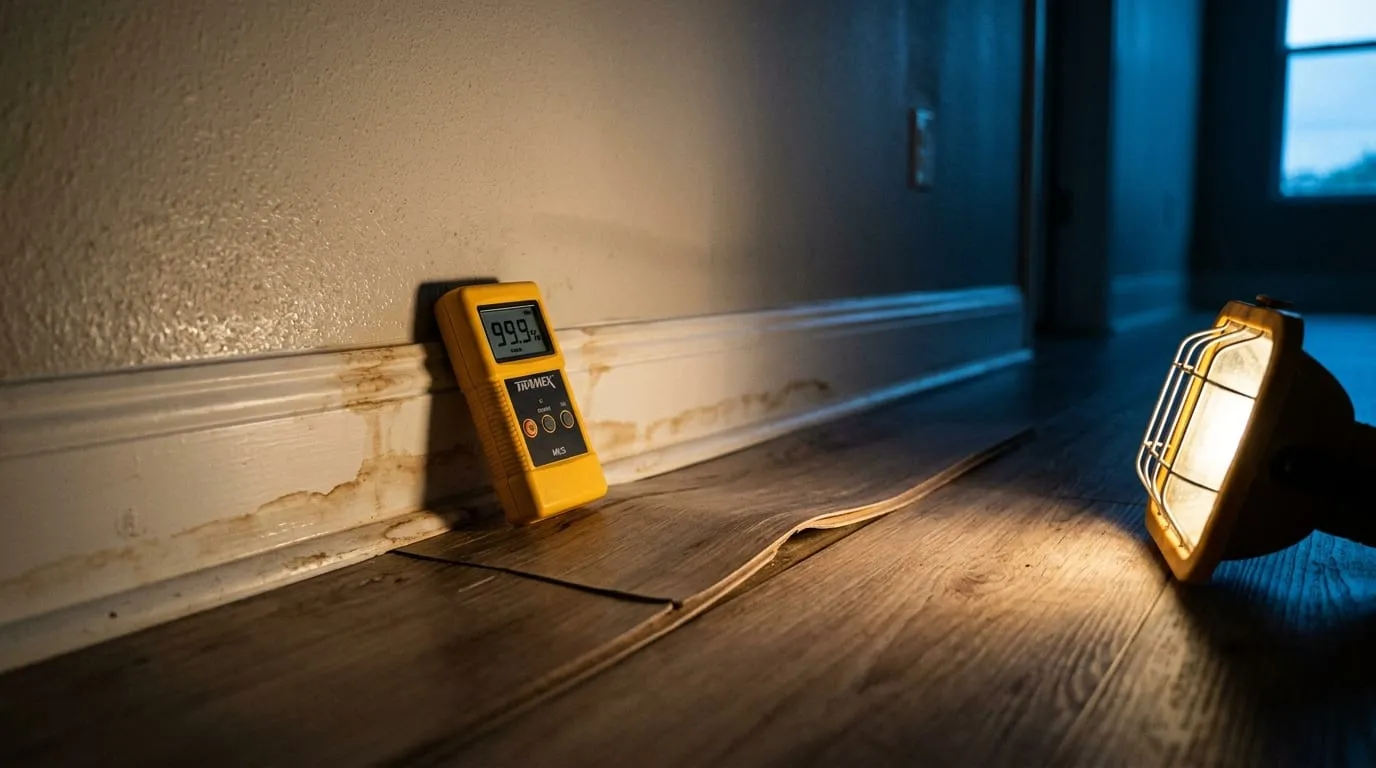
Cast iron replacementNowhere in the city does the ground slope enough to matter, at zero feet of elevation. A pressurized line failing beneath a slab sends water sideways through the fill instead of down, and it finally surfaces wherever a seam in the floor happens to give way, not at the actual break.
Have the source located before opening anything.
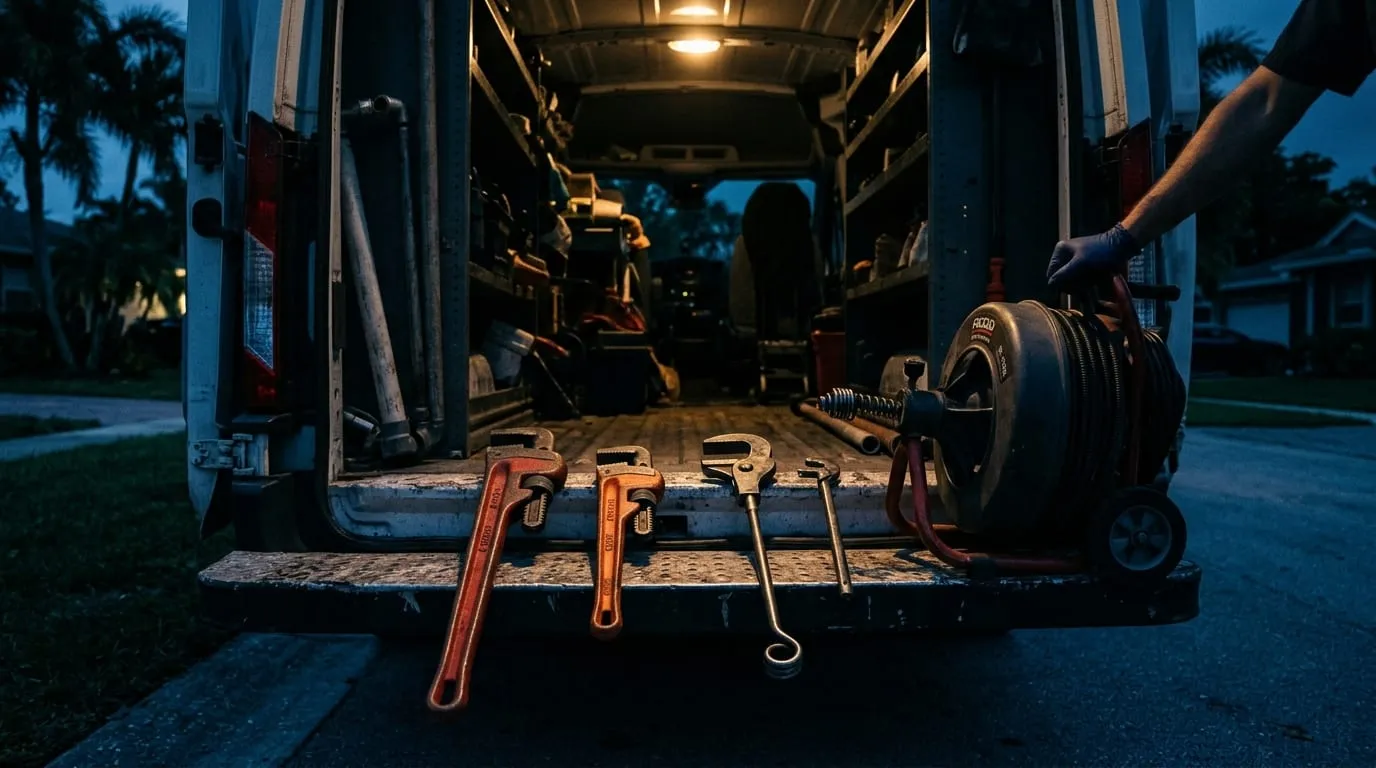
Leak detectionSpace built for manufacturing decades ago and now used differently often still has drainage sized for its original load. That calls for jetting and a camera, not another round of cabling.
Ask when the line was last jetted.
Hydro jettingWhere we work
The era a structure belongs to says more than its street does.
Ground that dates to the 1925 incorporation itself, old enough that a single building can hold both galvanized supply lines and cast iron drains at once.
The bulk of the city, built in successive waves from the 1960s onward, straddling the exact point where drain material switched from cast iron to PVC.
Manufacturing and textile buildings from the 1970s and 1980s now used for other things, carrying drainage that was never sized for their current load.
Who owns what
One of the larger municipal utilities anywhere in Miami-Dade.
Reviews
Taken directly from the company’s Google Business Profile, each quote credited to the reviewer’s own name.
A selection of our 5-star reviews on Google.
See all reviews on GoogleId be completely comfortable having them back for future plumbing work. Everything about this visit was straightforward and well handled.
He even explained which work wasn't worth spending money on yet. That's the kind of honesty that makes me want to call someone again.
Nothing about the job looked rushed. From the repair itself to the final testing, everything was handled carefully and professionally.
Questions
The city runs it. Hialeah’s own Department of Public Works utility answers for more than 230,000 residents and stretches into unincorporated Miami-Dade besides, an unusual setup in a county where buying from the county system is the norm.
Start with the build year, then confirm with a camera. Most of the city went up from the 1960s onward, straddling the point where drain material actually changed, so here it is a genuine question rather than a safe assumption either way.
Because there is no slope to speak of at zero feet above sea level. A broken line beneath the slab sends water sideways through the fill rather than down, and it surfaces at whatever seam gives first, rarely anywhere close to the actual break.
No. It is inside the coverage area the same as every other city on the map, from Palm Beach County down through Broward into Miami-Dade. The phone is answered by a person at any hour regardless of which end of that map the call comes from, and Hialeah sits toward the far end of it.
The neighbors
Two directions lead to older ground; one leads to much newer.
Live dispatch · 24 / 7 / 365
A person answers the phone at any hour and sends a plumber to the address, no matter which end of the map the call is coming from.
No cost to ask questions. Work performed under Florida plumbing contractor license CFC1433655.