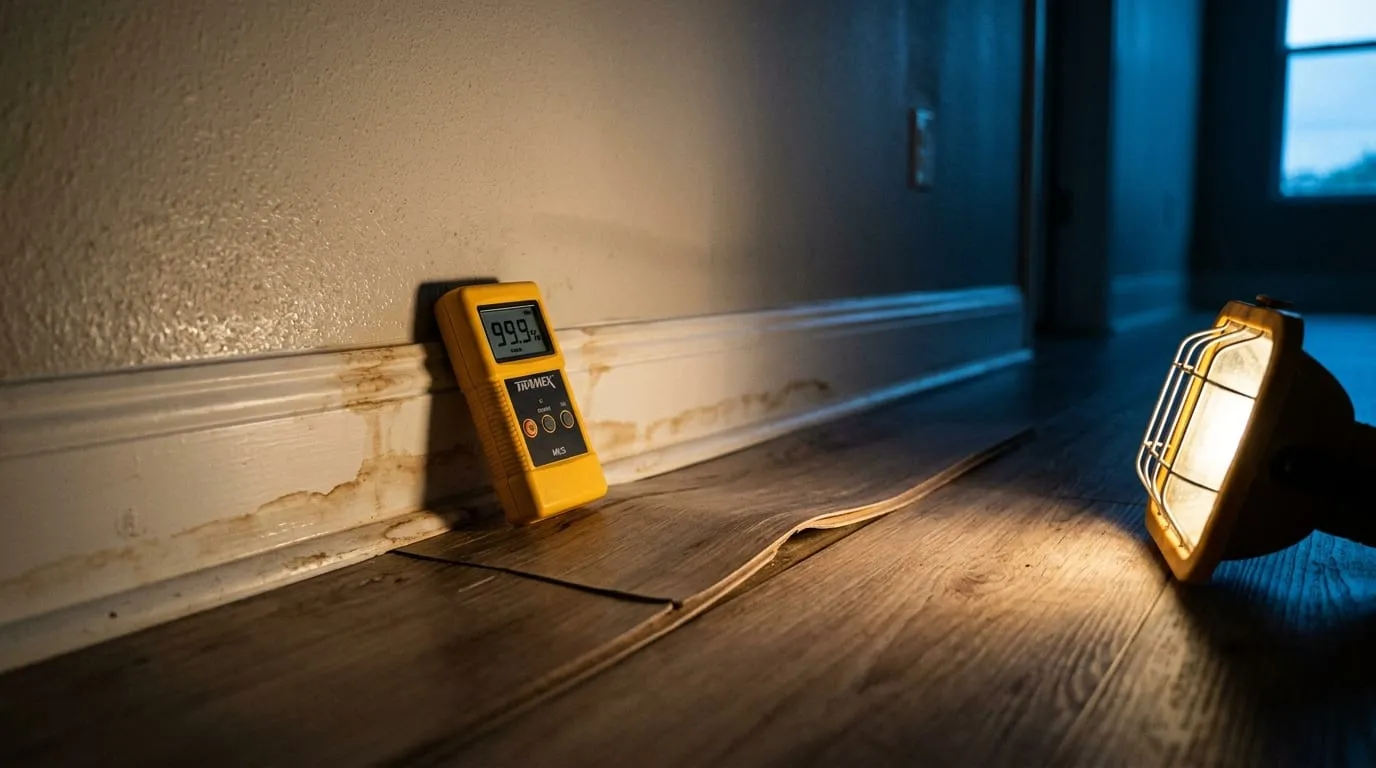
Roots that work year-round
Banyan, ficus and royal poinciana grow through every season here, so a joint they’ve found never gets a break.
Cleared, then diagnosed · answered 24/7
Which fixtures are acting up narrows down where the blockage sits before anything gets opened, and where it matters, a camera settles whether the cause traveled down the drain or was waiting in the pipe all along.
Why does the same drain keep clogging back up?
Clearing a blockage and fixing whatever caused it are two separate jobs, and most calls only get the first done. A snake punches a path through whatever is blocking the pipe; if the wall is scaled or a root has broken through a joint, that path closes again at roughly the rate it filled the first time.
The most useful clue is which fixtures are affected. A single slow fixture usually means a local blockage close to its own trap. When several go slow together, or the lowest one in the house backs up while everything else keeps draining, that points to the main line instead, a different job, with different urgency.
A condo tower adds a third pattern entirely: whoever calls in the backup is rarely the cause of it, since one shared stack drains every unit stacked above. That single fact changes both the repair and the argument over who covers it.
Reading the pattern
The pattern is most of the diagnosis, worth noting before you pick up the phone.
A local issue, typically: hair and soap caught in a bathroom trap, grease built up in a kitchen line. A quick clear usually does it.
Points to the main line. The lowest fixture shows it first, which is why a shower floods while sinks upstairs still drain.
Air forced back through a trap: the line downstream can’t handle the volume, not that the gurgling fixture is blocked.
A blockage that returns within weeks is a scaled pipe or a root, not a habit. Clearing it again just repeats the cycle.
Points to the stack everyone shares, not any single unit. Whoever calls it in is usually just the lowest connection on that stack, not where it began.
How the visit goes
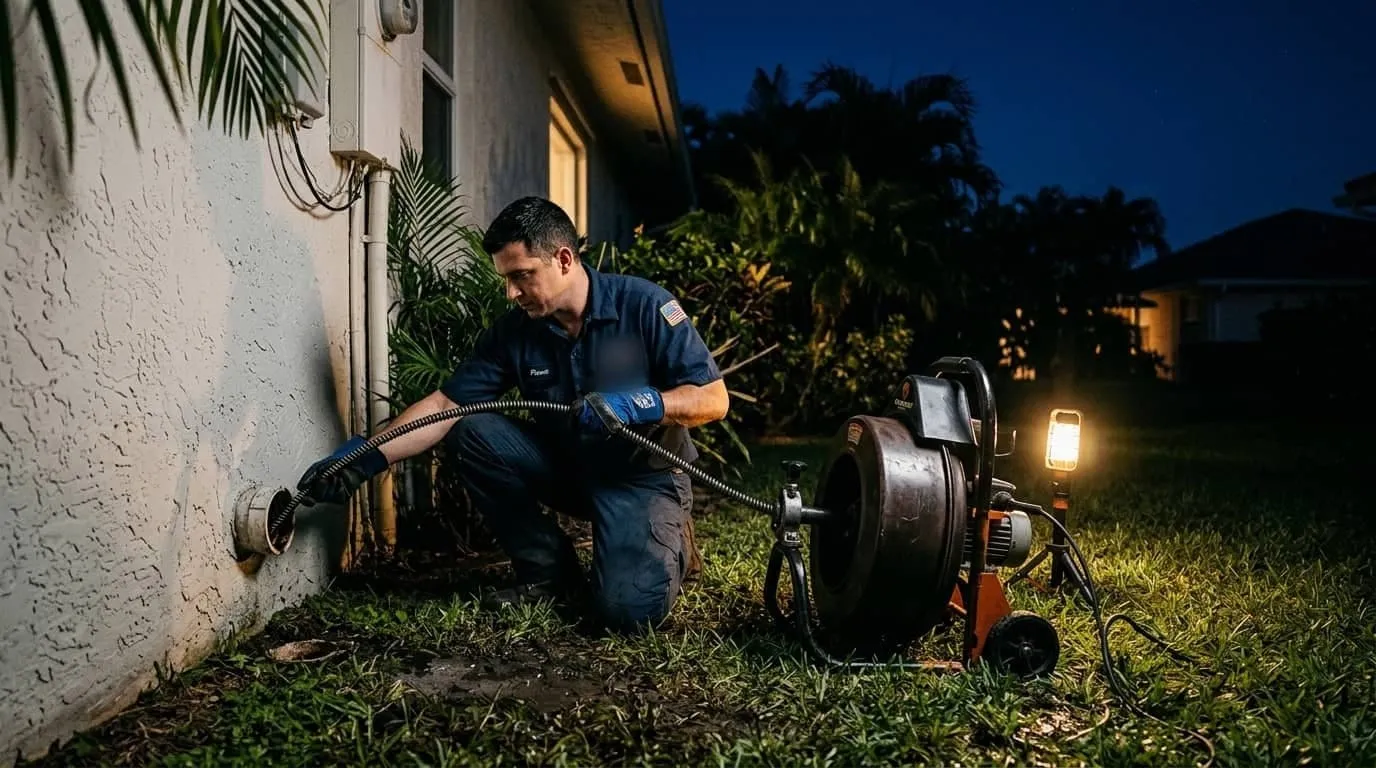
Four steps: a working drain comes first, diagnosis right after.
Which fixtures, in what order, and whether anything gurgles. Often decides where to start and saves an hour of guessing.
Cabled or jetted, depending on what’s blocking it. Grease and scale respond to jetting; a root mass needs cutting first.
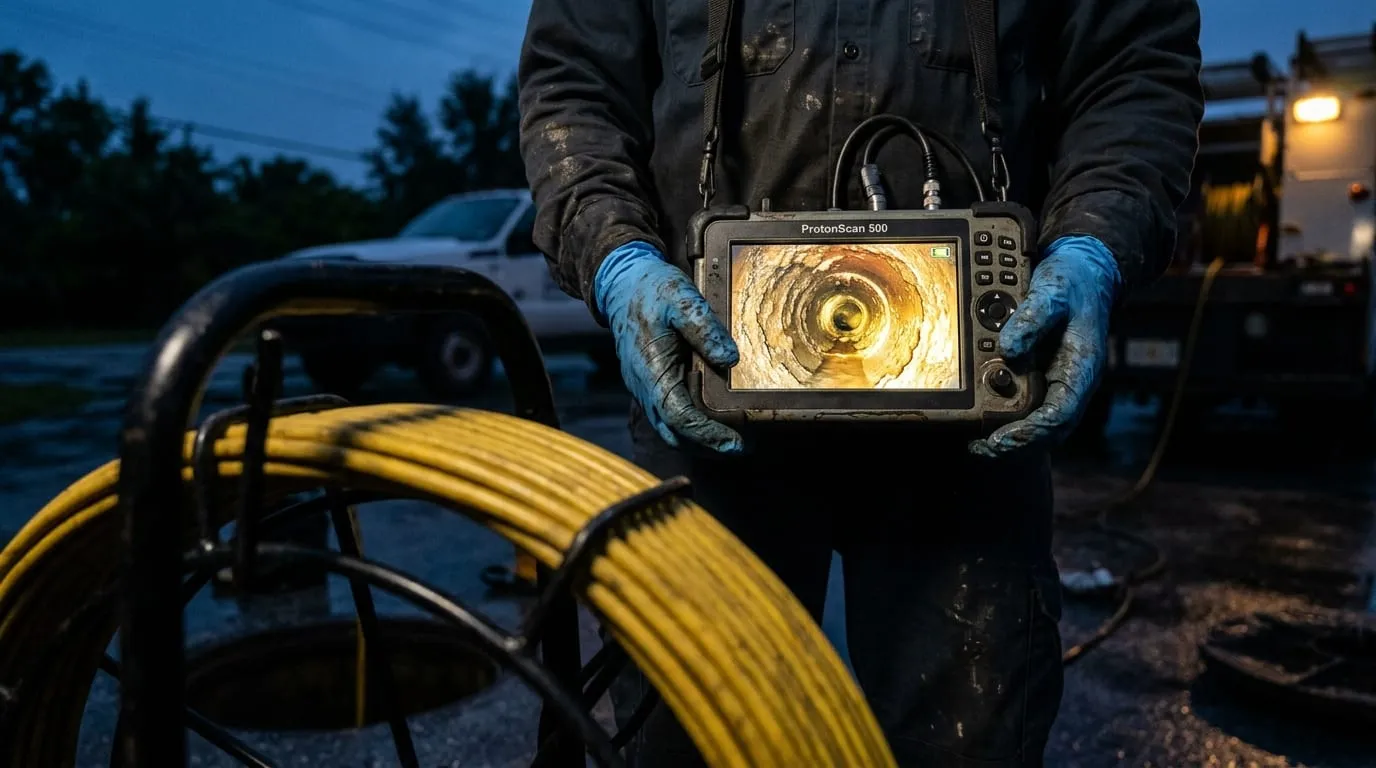
A camera pass when the blockage came back fast, or the house is old enough for cast iron to be a suspect.
Sometimes the line genuinely needs nothing more. Where it’s scaled or broken instead, you see the footage yourself and choose from the real options it points to.
Why it happens more here
Three regional causes explain most drains that clog more than once.
Banyan, ficus and royal poinciana grow through every season here, so a joint they’ve found never gets a break.
A hairline crack leaks vapor and nutrients into the soil, drawing roots toward it. Inside, the root mass snags everything passing through.
In houses from the postwar years through the mid-1970s, the bore roughens and scales with age, catching debris a smoother pipe would carry away.
A blockage in a shared stack shows up in the lowest connected unit. Whose responsibility that is comes down to the association’s documents.
A heavy rain event pushes the water table up and loads older laterals beyond what they can carry, one reason repeat blockages bunch up in the wettest months.
Reviews
Sourced directly from the company’s Google Business Profile, each quote attributed to the reviewer’s public name.
A selection of our 5-star reviews on Google.
See all reviews on GoogleId be completely comfortable having them back for future plumbing work. Everything about this visit was straightforward and well handled.
He even explained which work wasn't worth spending money on yet. That's the kind of honesty that makes me want to call someone again.
Nothing about the job looked rushed. From the repair itself to the final testing, everything was handled carefully and professionally.
Questions
On a single slow fixture, sometimes. On a main line it usually doesn’t work, and on old cast iron it can worsen an already thin wall.
For grease and scale, yes. It cleans the wall rather than punching through. A root mass usually needs cutting first.
No. A first-time blockage in a newer house rarely needs one. It earns its place once a blockage keeps returning fast.
It hinges on where exactly the blockage sits and what the association’s governing documents say about that stretch of pipe. That line gets disputed often enough that the paperwork usually ends up settling it.
A slow drain, sure. Sewage coming up inside the house can’t, and a fully stopped main line can’t either: every fixture in the building loses somewhere to send its water.
What a repeat clog points to
What a stubborn, repeat clog most often becomes.
Live dispatch · 24 / 7 / 365
Note which fixtures are affected, then call. Someone answers at any hour of the day or night.
No obligation. Work performed under Florida plumbing contractor license CFC1433655.