Close to half live in mobile homes
That one fact sets this town apart structurally from everywhere else in the service area, because it changes where the plumbing physically sits.
Broward County · the phone is live right now
The first question dispatch asks is whether the address is a mobile home or a conventional house, because the two run on entirely different plumbing systems with entirely different shut-offs.
What changes when the address is a mobile home?
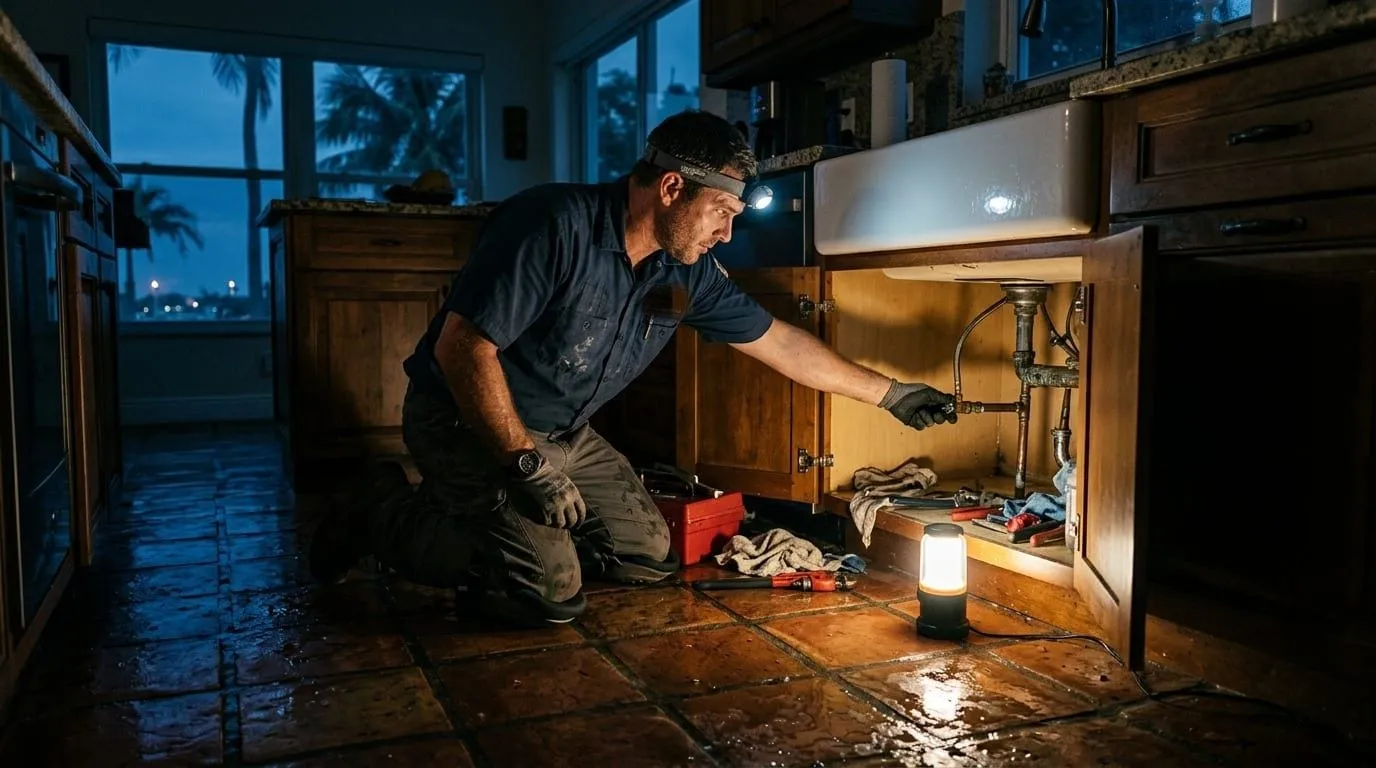
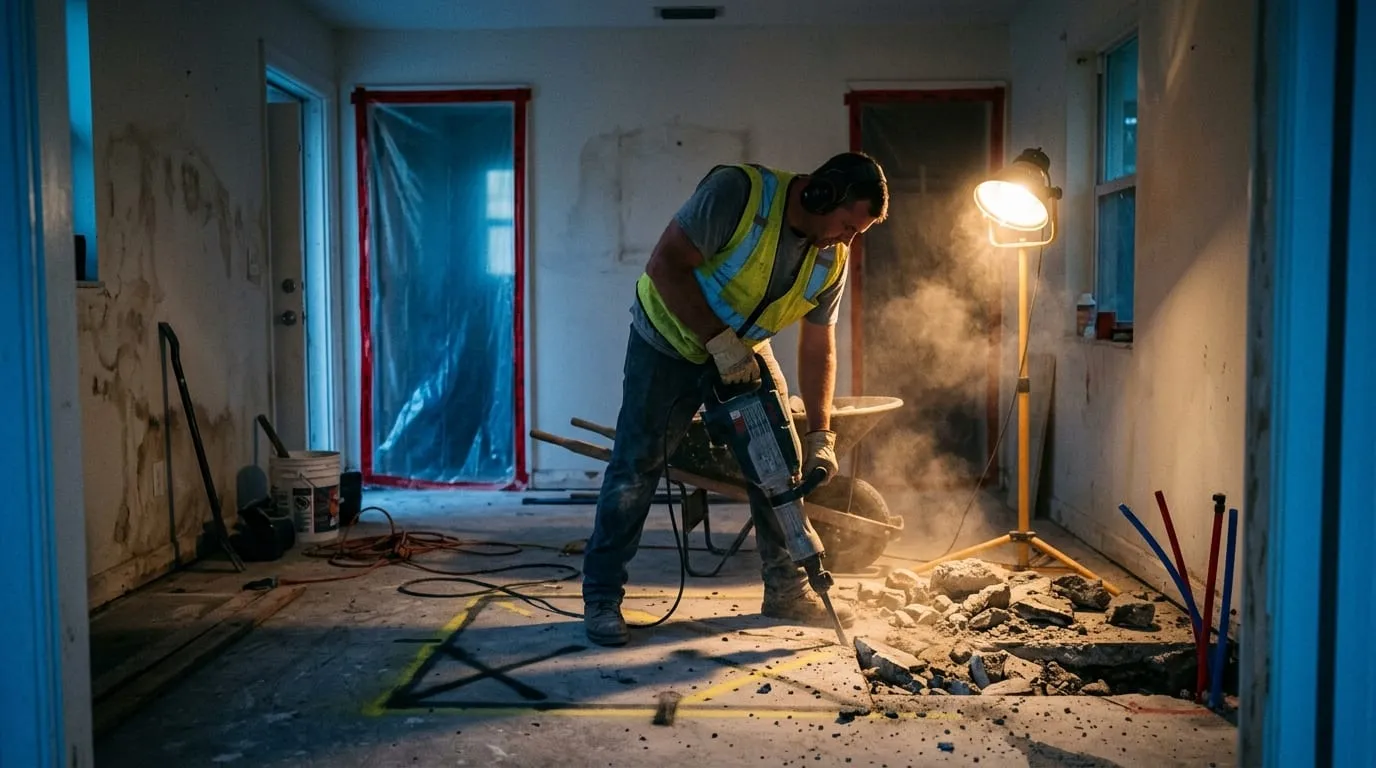
Almost the entire layout of the plumbing. Pembroke Park houses more mobile homes than any other town in the service area, close to half of all residences here, and getting to a leak means opening a skirted crawl space beneath the floor rather than breaking into a poured slab, easier to reach, certainly, but just as able to drip unnoticed for months before anyone below the home notices.
The shut-off works differently too. Rather than a meter box out at the street, there is typically a valve at the home itself, and a stretch of the line between the street and the home is frequently owned by the park itself, not by the resident, and not by the utility.
That last point is worth settling before anything breaks. Responsibility comes down to exactly where along the park’s own distribution system a failure occurs, and figuring that out first is what keeps a simple repair from turning into a dispute over who pays.
Beneath the skirting and the slab
One and a half square miles, and roughly half of it was never poured on a slab.
That one fact sets this town apart structurally from everywhere else in the service area, because it changes where the plumbing physically sits.
First as Pembroke that December, then re-chartered as Pembroke Park in June 1959, right in the middle of South Florida’s mid-century growth surge.
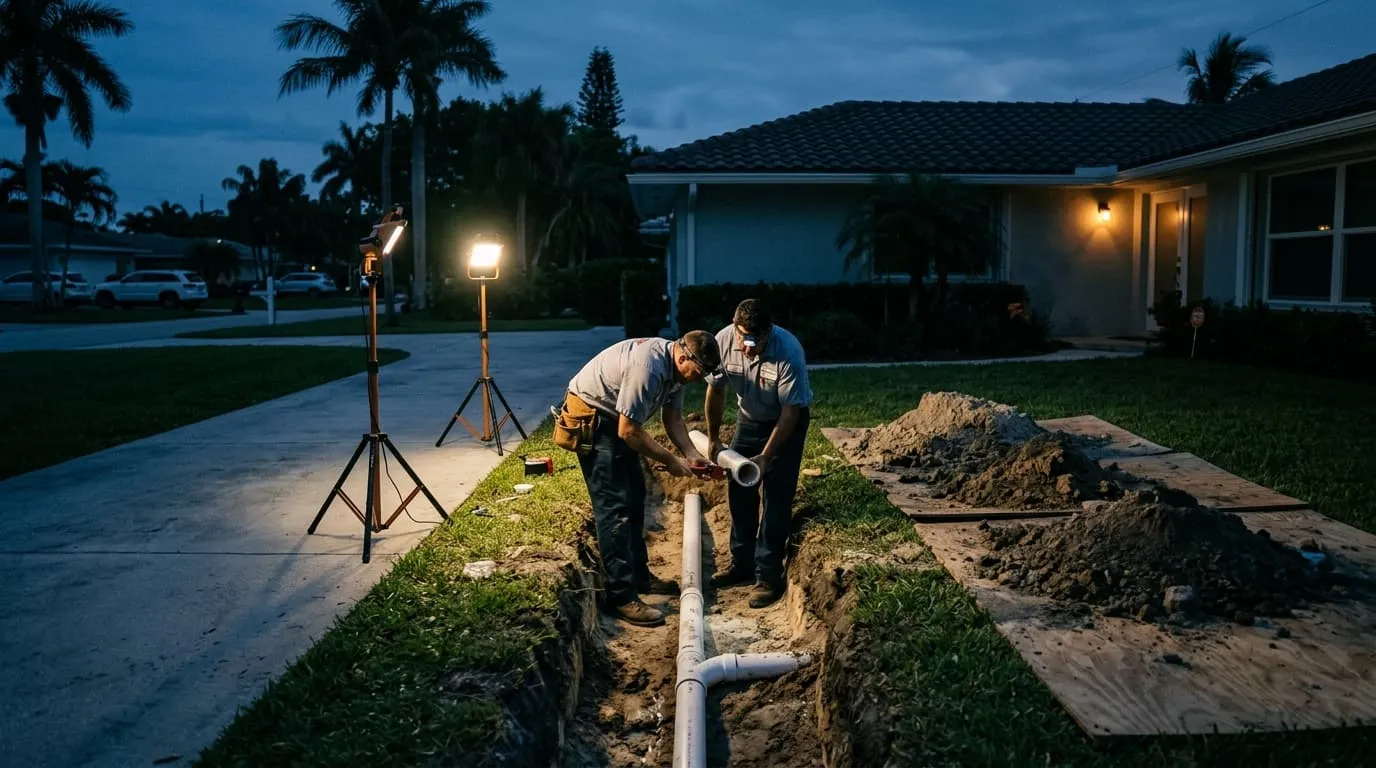
A mobile home’s lines sit in a crawl space under the floor, easier to reach than a slab, but just as easy to leak behind the skirting for months unnoticed.
The stretch of distribution line between the street and the home is frequently the park’s property rather than the resident’s or the utility’s, which decides who is on the hook for repairs.
The county line sits right there, with its own utility and its own permit desk on the far side.
What actually fails
Two of the three trace straight back to the mobile home communities.
Behind the skirting, a leak can run for months with nothing showing up indoors. Being reachable is the upside over a slab; the downside is that nothing signals it until the water bill does.
Read the meter with every fixture closed.
Leak detectionBetween the street and the home, a segment of the distribution line often belongs to the park. Working out where that boundary sits is the first job, since it decides who does the repair and who covers it.
Ask the park exactly where its responsibility stops.
RepipingThe non-mobile housing stock dates to the 1950s growth years, putting it in the cast iron era. A clog that keeps returning there is the pipe reporting its own condition.
Ask for a camera before paying for a third clearing.
Cast iron replacementAcross the town
A small town, but two genuinely different ways a house can be piped.
Close to half of this town. Supply and drain lines run beneath a skirted crawl space instead of a poured slab, the shut-off is typically mounted at the home instead of a curbside meter, and a stretch of the distribution line often belongs to the park.
Dating to the growth years around the town’s incorporation, which puts it in the cast iron era along with the recurring drain trouble that comes with it.
The southern edge, where the county line runs behind a row of properties and both the utility and the permit office change on the other side.
Who to call
A mobile home community adds a third party to the ownership question.
Reviews
Pulled directly from the company’s Google Business Profile, each one credited to the reviewer’s public name.
A selection of our 5-star reviews on Google.
See all reviews on GoogleId be completely comfortable having them back for future plumbing work. Everything about this visit was straightforward and well handled.
He even explained which work wasn't worth spending money on yet. That's the kind of honesty that makes me want to call someone again.
Nothing about the job looked rushed. From the repair itself to the final testing, everything was handled carefully and professionally.
Questions
Yes. Mobile homes make up close to half the calls in this town. The job itself looks different from a standard house: supply and drain lines sit inside a crawl space beneath the floor rather than buried in a slab, and you will typically find the shut-off valve mounted at the home instead of out at a curbside meter.
Under a mobile home, the likely culprit is a line leaking behind the skirting, sending water straight into the ground without any sign of it indoors. Shutting off every fixture and then watching whether the meter still moves is the fastest way to prove it before anything gets opened up.
It comes down to exactly where the failure sits against the park’s own distribution system, and that is worth sorting out before any repair begins rather than afterward. A section of the pipe running from the street to the home often turns out to be the park’s, and the dividing line is rarely where a resident expects.
For most mobile homes, look at the unit itself rather than hunting for a meter box near the street. Spending five minutes now to locate that valve and check that it turns freely is what separates a routine repair from a much larger rebuild if something lets go later.
Right next door
Coast on one side, the county line not far past the others.
Live dispatch · 24 / 7 / 365
A live person answers whenever you call: mention whether it’s a mobile home or a house, since that changes the first thing we’ll ask you to do.
No obligation. Work performed under Florida plumbing contractor license CFC1433655.